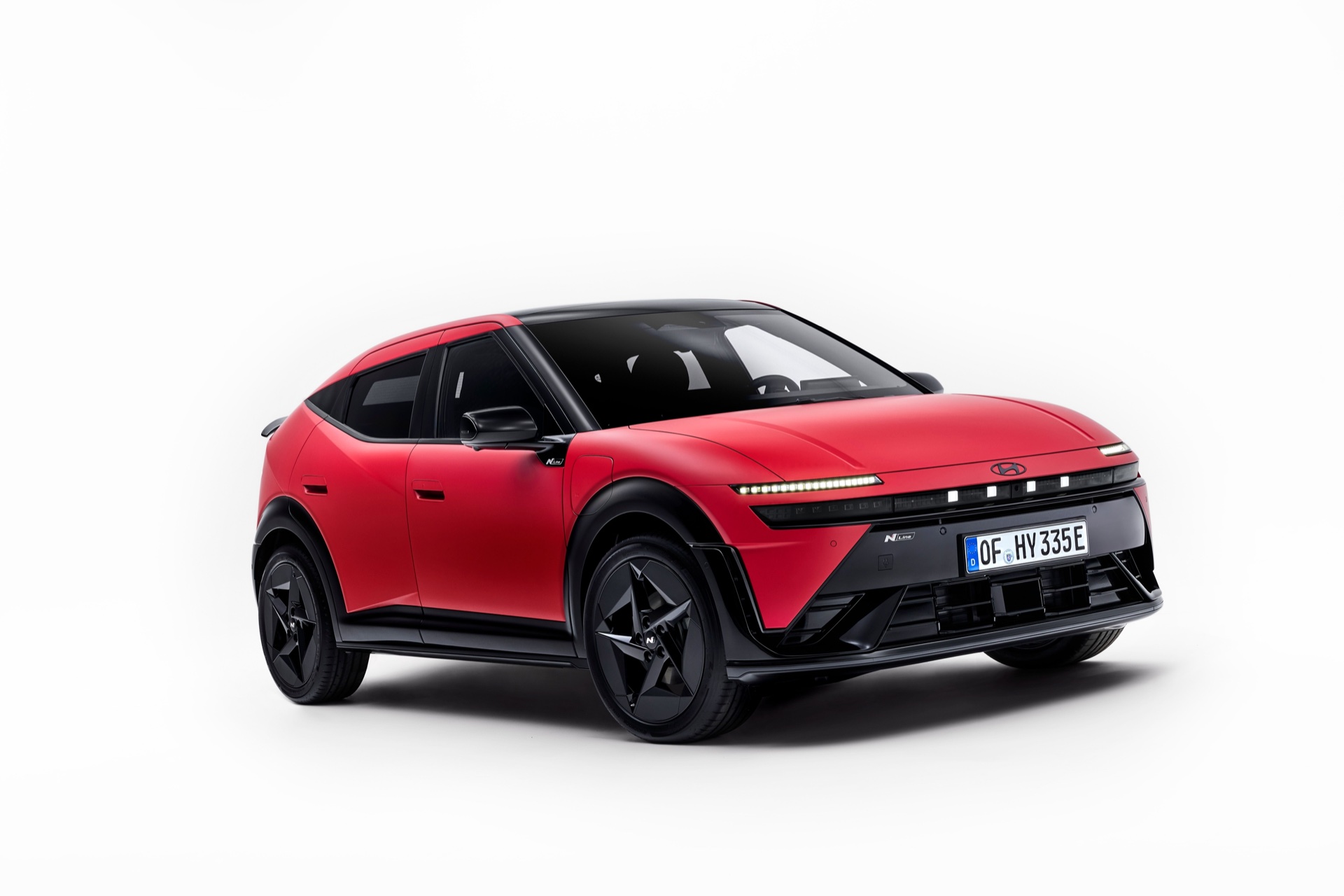
Hyundai Motor UK opened reservations for the IONIQ 3 on 17 August 2026. The manufacturer’s own price list starts at £22,245 on-the-road for the Advance 42 kWh, which is the cheapest new Hyundai EV you can put a deposit on in Britain this week. AM Online, EV Fleet World, Motor Trader, and Car Magazine all reprint the same five-rung ladder, so the pound figures are not a single-outlet leak.
That matters for anyone already comparing compact hatches on GetEVCar. The live Hyundai IONIQ 3 (2026) page already lists UK availability in pounds. Until Monday, it did not have a bookable OTR price. It does now — with the caveat that Hyundai still marks range as “pending final homologation.”
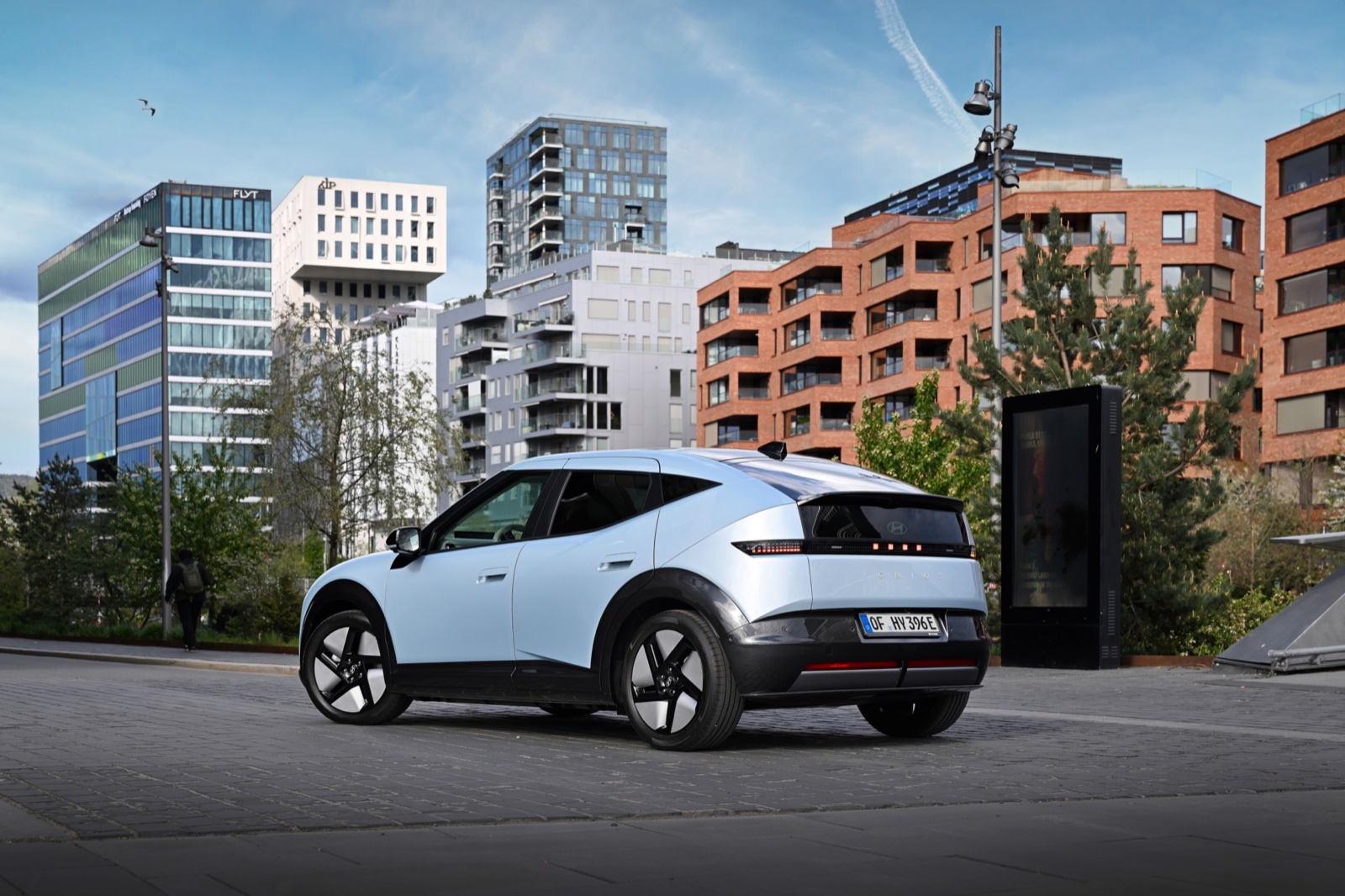
The line-up is four trims and two batteries. Advance is the only grade that still offers the 42.2 kWh pack; Premium, Ultimate, and N Line Evo are 61 kWh only. Hyundai’s table, confirmed independently by the trade press, is:
- Advance 42 kWh — £22,245, expected 213 miles
- Advance 61 kWh — £25,745, expected 308 miles
- Premium 61 kWh — £27,445, expected 303 miles
- Ultimate 61 kWh — £29,945, expected 300 miles
- N Line Evo 61 kWh — £31,945, expected 265 miles
The 61 kWh cars carry a second, bracketed price £1,500 lower. Hyundai is applying that cut itself, as a “Reservation Saving,” while the model waits for Electric Car Grant assessment. AM Online and Car Magazine both describe it as a bridge, not a government decision. If the grant is later awarded at the same £1,500 Band 2 rate, the saving should not stack on top. The 42 kWh Advance is listed without a bracketed figure, so do not assume it qualifies.
Range falls as wheels get larger. Advance on 16-inch alloys is the 308-mile headline; N Line Evo on 19-inch wheels is quoted at 265. That is Hyundai’s own homologation-pending table, not a road test. Treat every mile figure as expected WLTP until the final certificate lands. The same sheet gives the 42 kWh car 147 PS and 8.8 seconds to 62 mph, and the 61 kWh car 135 PS and 9.5 seconds (9.6 on N Line). The smaller pack is the quicker one. Max DC is listed at 119 kW and 110 kW respectively; a 10–80% top-up at a 350 kW CCS site is estimated at 29 minutes or 30 minutes. AC is 11 kW on both.
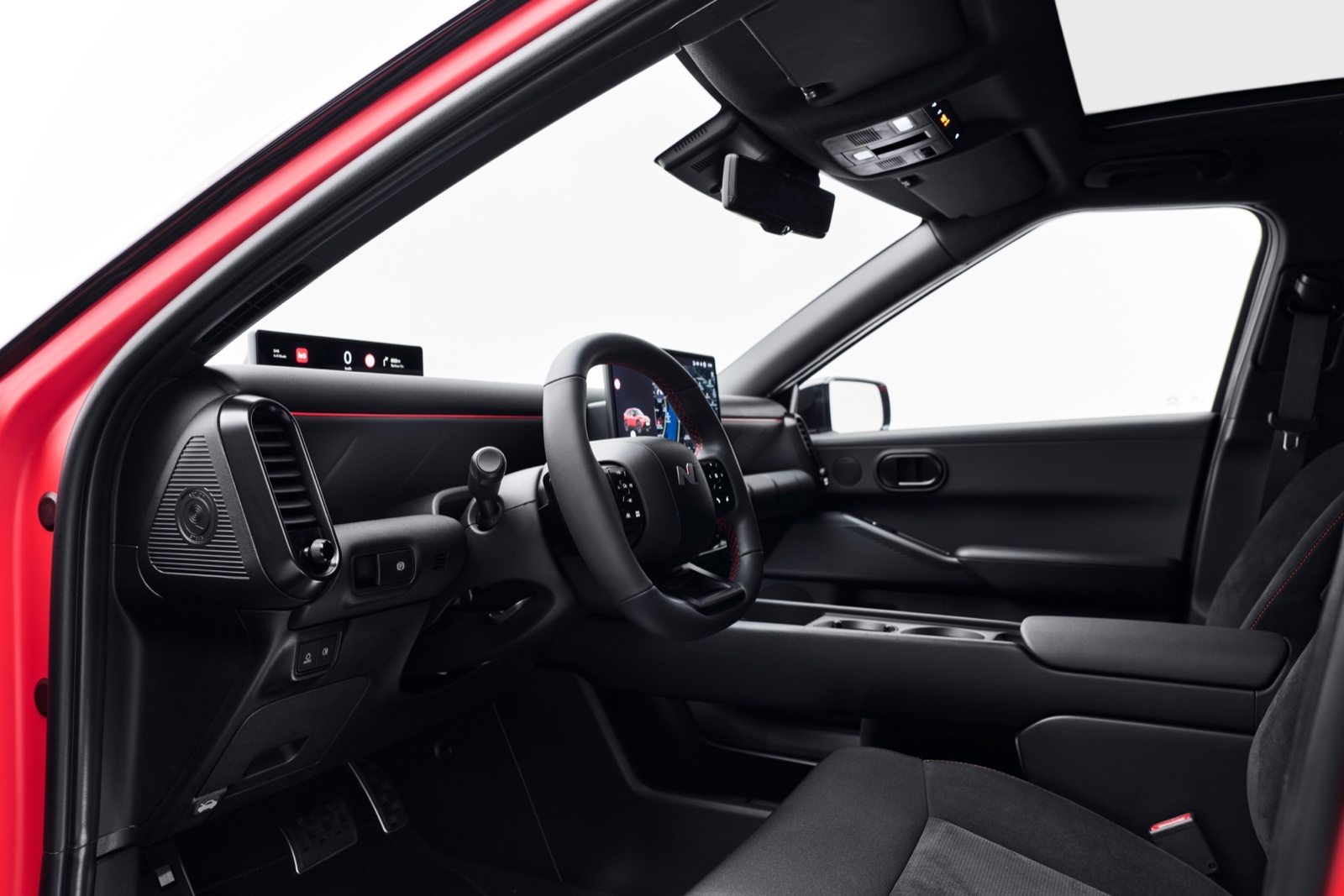
For a B-segment footprint (4,155 mm long, 2,680 mm wheelbase), Hyundai claims 441 litres of boot space with the seats up and a 0.263 drag target. Plug & Charge, an EV route planner, Digital Key 2, and Vehicle-to-Load are on the technology list; Memory Reverse Assist — storing the last 50 metres of steering inputs — is an N Line Evo item. Pleos Connect, based on Android Automotive OS, is the first European Hyundai infotainment stack of that type, with a 12.9-inch screen on most trims and 14.6 inches on N Line Evo.
Context for UK shoppers sitting in the hatchback aisle: Volkswagen’s ID.3 Neo opened for UK order on 13 August from £33,080 OTR before the grant. The IONIQ 3 undercuts that by roughly £11,000 at the base of each ladder, in exchange for a smaller body and a 400-volt architecture rather than the ID.3’s larger packs. The Volkswagen ID. Polo is the closer size rival once it is priced; it is not on sale in Britain yet. EV Fleet World also named the Renault 5 as a competitor — we do not yet have a Renault 5 model page, so that comparison stays qualitative.
What is not confirmed: a UK first-delivery week. Hyundai’s 17 August release opens reservations and points buyers to hyundai.co.uk. It does not print a showroom date. Electrek has previously reported late-September arrivals for European IONIQ 3 stock after İzmit production began; that is not in the UK pricing paper, so we are not treating it as a British on-sale day. The Electric Car Grant itself is also still an assessment, not an award. Reservations are open through Hyundai’s UK configurator.
Sources: Hyundai Motor UK press release, 17 August 2026; AM Online; EV Fleet World; Motor Trader; Car Magazine (all 17 August 2026). Range, charge times, and OTR prices are manufacturer figures pending final homologation where Hyundai says so.