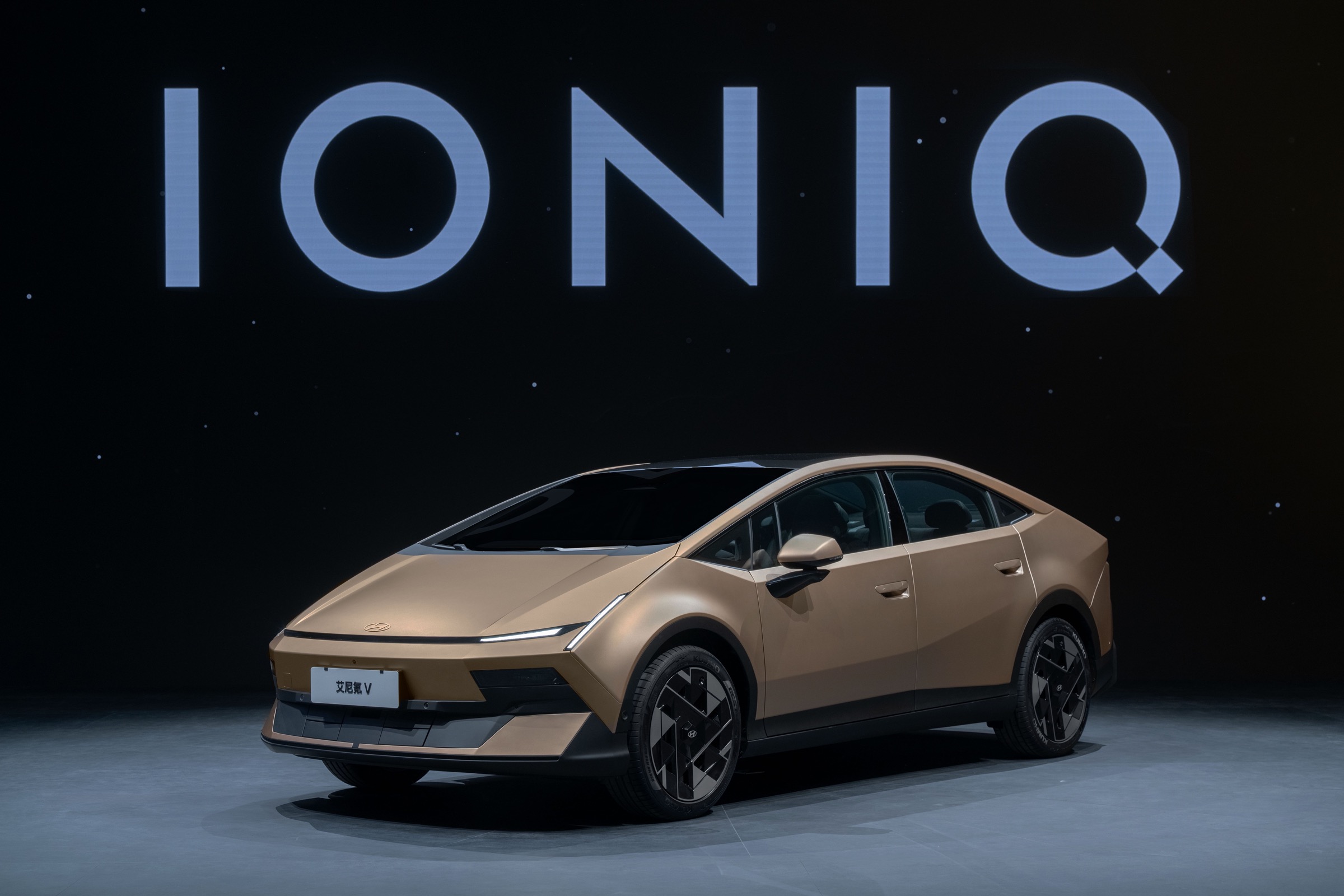
Beijing Hyundai opened orders for the Hyundai Ioniq V (2026) on 29 September 2026. CnEVPost and CarNewsChina agree on the shape of the deal: suggested retail prices run from 109,900 to 139,900 yuan, and a limited-time launch offer cuts that to 99,900–131,900 yuan. CnEVPost says the cut is 8,000 or 10,000 yuan depending on the variant, and that the new floor sits 20,000 yuan under the August pre-sale start of 119,900 yuan. These are China prices. They are not a dollar, pound, or dirham sticker, and neither report gives the UAE, the UK, or the US an on-sale date.
CarNewsChina lists five trims before the discount: 540 Pro at 109,900 yuan, 540 Max at 119,900, 540 Max+ and 650 Max both at 129,900, and 650 Max+ at 139,900. Electrek printed the same five rungs the same morning. CnEVPost converts the promotional 99,900 yuan to about $14,820. CarNewsChina’s dollar figure on the undiscounted 109,900 yuan is about $16,380. Those are different steps on the ladder, not two prices for the same car.
The Ioniq V is a battery-electric fastback, not a plug-in hybrid. CnEVPost and Electrek both place it on Hyundai’s E-GMP platform with 800-volt charging hardware. CnEVPost and CarNewsChina both describe a single motor and CATL lithium-iron-phosphate packs. The shorter-range cars use about 53.5 kWh — CnEVPost’s figure is 53.48 kWh — with a 140 kW motor and a 540 km CLTC rating. The longer-range cars use about 66.8 kWh — CnEVPost says 66.85 kWh — with a 168 kW motor and a 650 km CLTC rating. CarNewsChina also prints those motors as 188 hp and 225 hp. CLTC is China’s lab cycle. This post does not turn it into an EPA or WLTP range, and neither launch report states a DC charging rate in kilowatts, so none is given here.
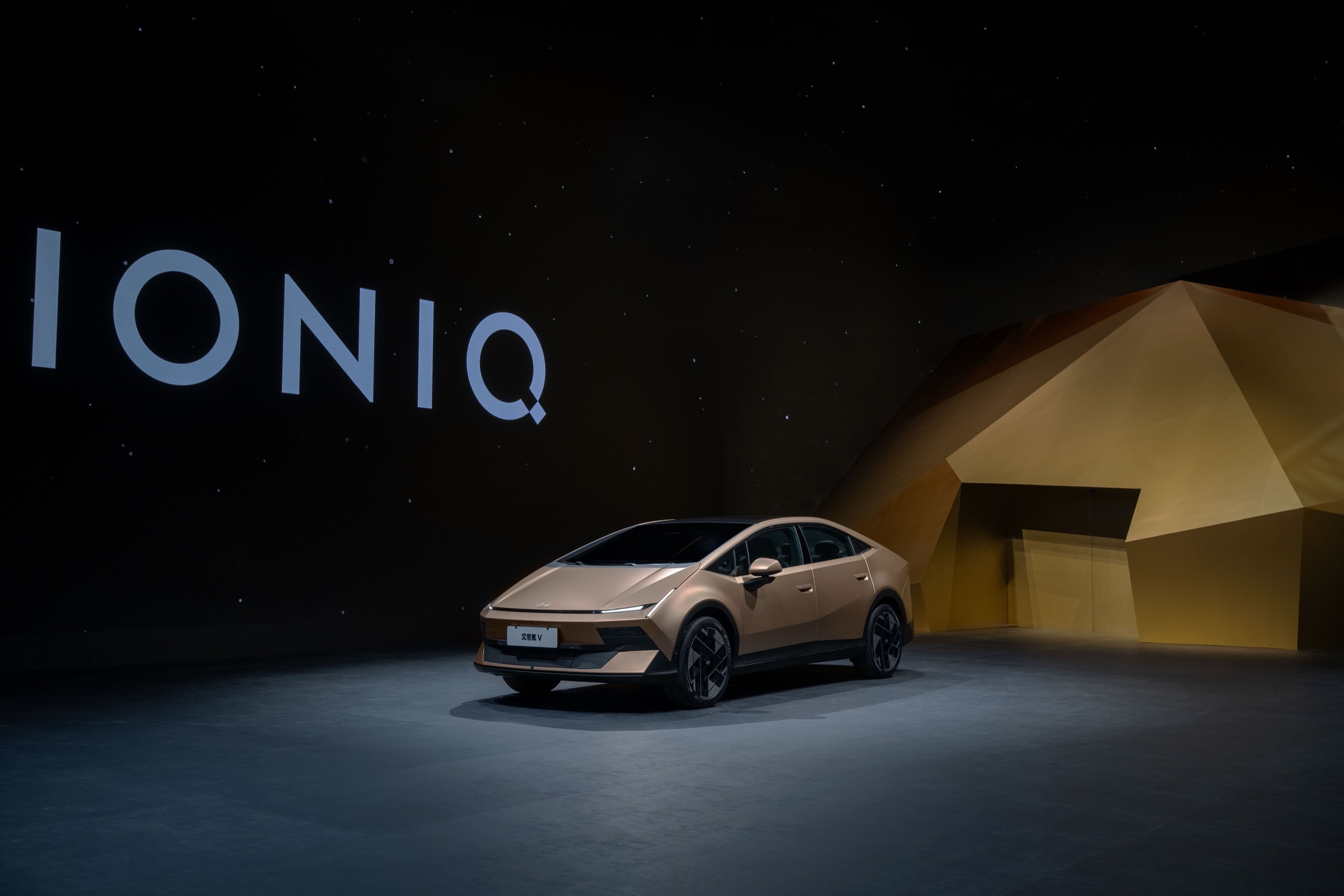
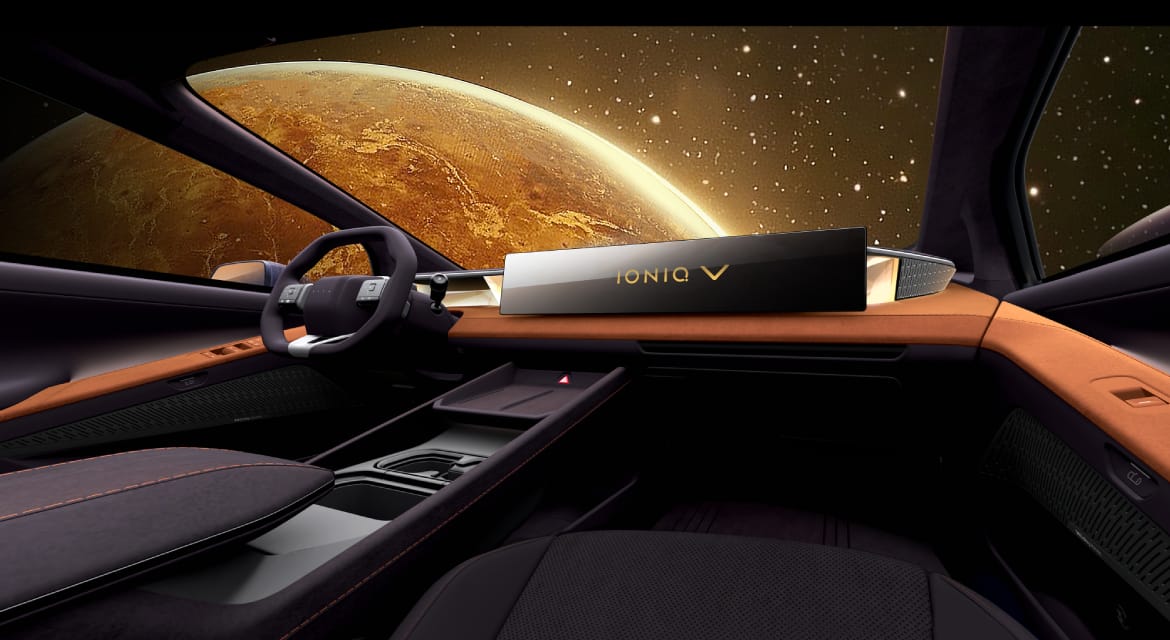
Those two outlets also match on size: 4,900 mm long, 1,890 mm wide, 1,470 mm tall, wheelbase 2,900 mm. CarNewsChina alone adds a claimed drag coefficient of 0.23 and a 465-litre trunk. The cabin in both reports centres on a 27-inch screen. CnEVPost calls it a 4K display and names a Qualcomm Snapdragon 8295P, voice models from Baidu and ByteDance, and an L2+ driver-assist system developed with Momenta, including highway navigation, urban memory navigation, and parking assist. CarNewsChina names a Snapdragon 8295 and the same Momenta partnership for highway navigation assist. CnEVPost also reports a lifetime vehicle warranty and battery-degradation cover as launch benefits, with time and mileage limits. Those warranty terms are from that one report.
CnEVPost says the car was drawn for Chinese buyers and is also intended for other markets. CarNewsChina calls a wider rollout expected. Neither sentence is a date. Readers comparing a Hyundai battery sedan that already has a page here should open the Hyundai Ioniq 6 (2025), listed in the UAE, the United States, and the United Kingdom. The Ioniq V is a separate China-market car. It shares the Ioniq name with the Hyundai Ioniq 5 (2026), but the yuan prices above are not Ioniq 5 prices. The rest of the group’s battery cars and plug-in hybrids sit on the Hyundai brand page.