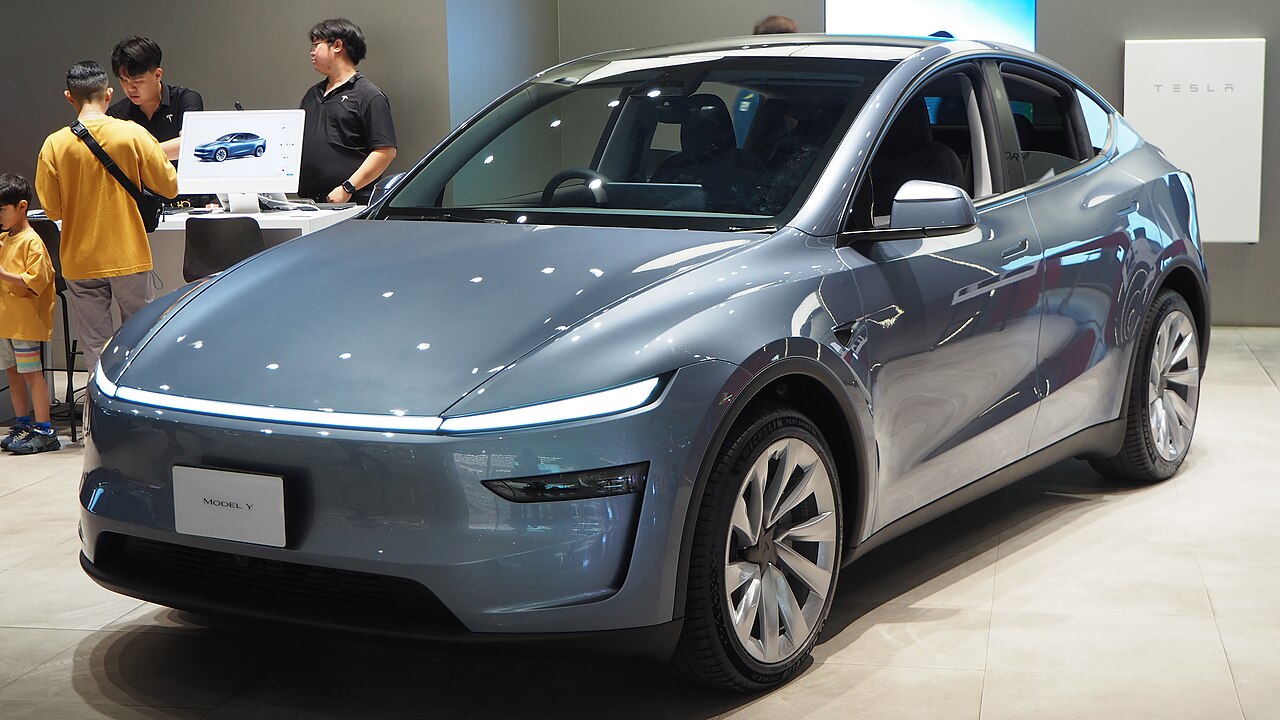
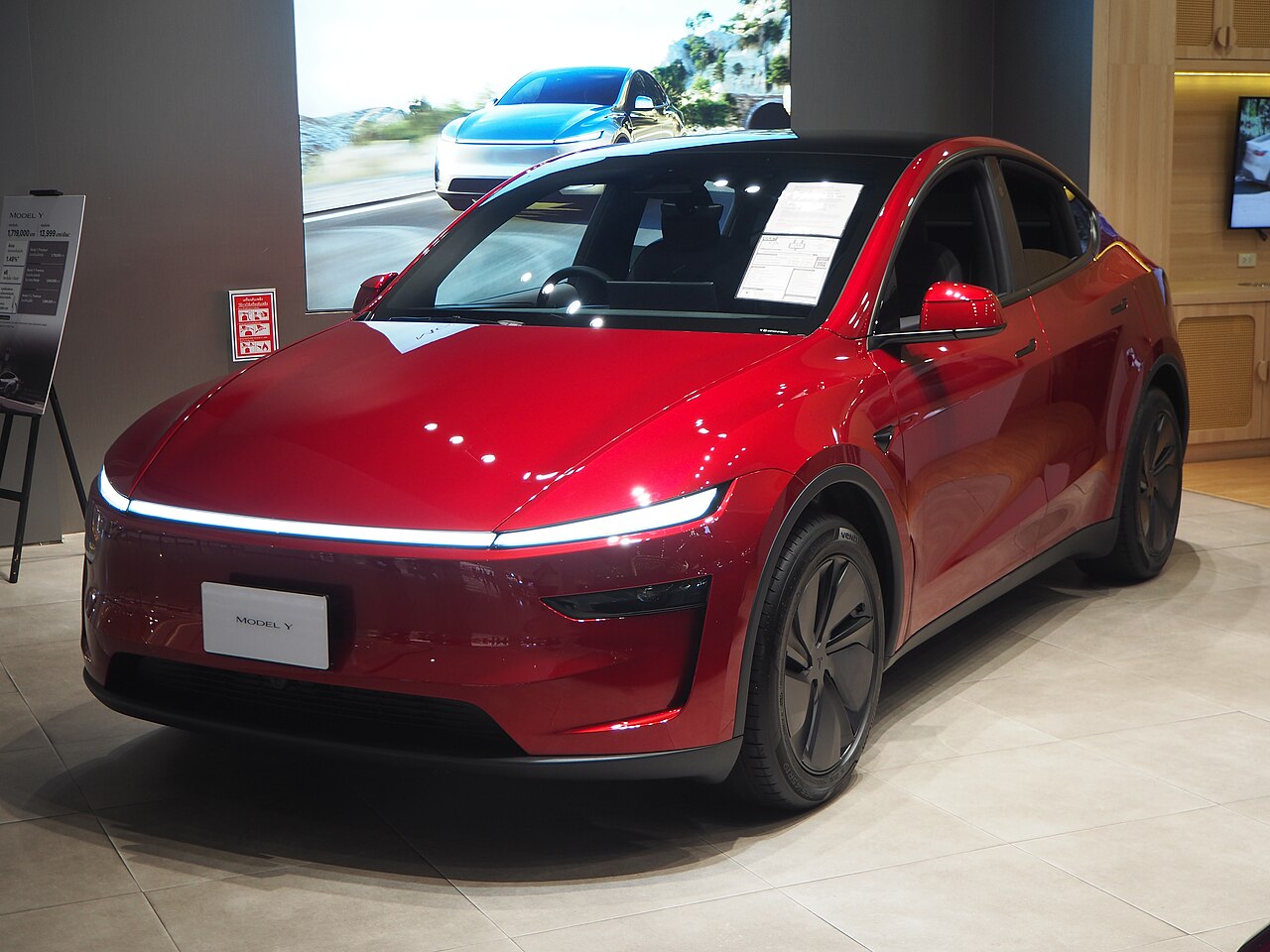
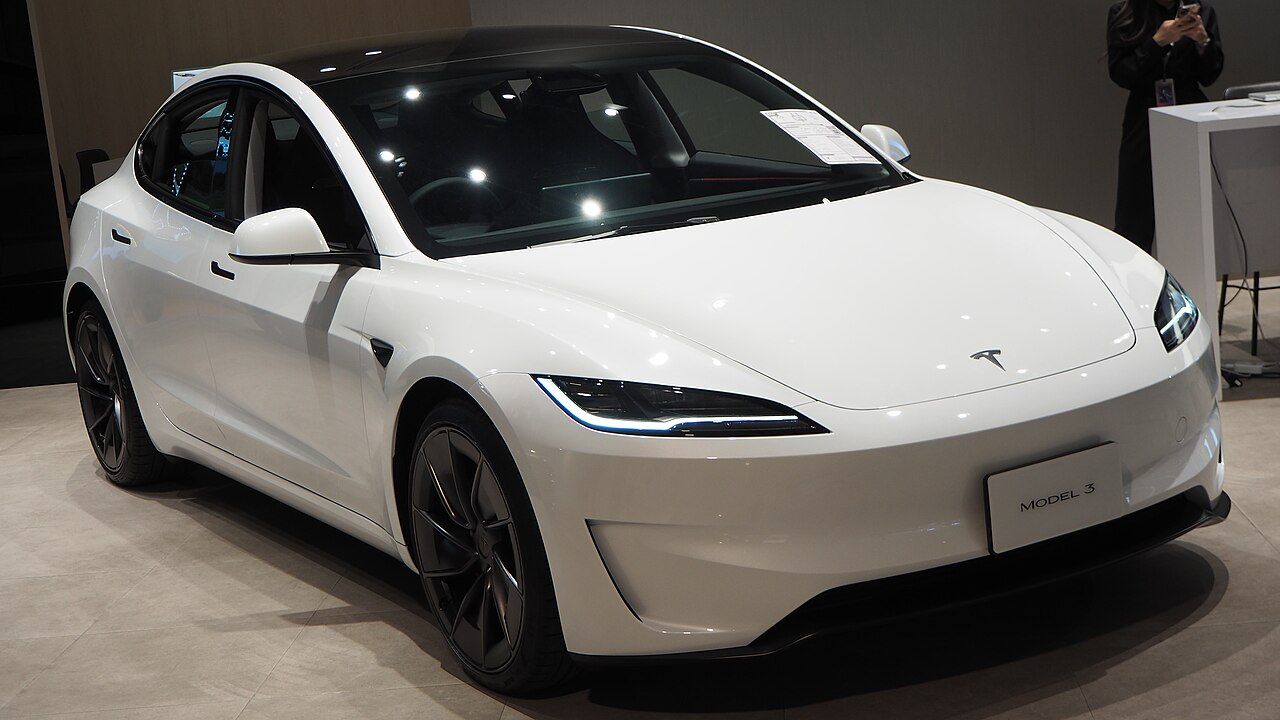
Tesla’s third-quarter update, filed on 21 October 2026, is a financial report. The line in it that matters for someone comparing cars is the delivery split: of 486,532 vehicles delivered in the quarter, 478,237 were a Model 3 or a Model Y.
Everything else Tesla sells as a passenger vehicle was 8,295 deliveries, down from 15,933 a year earlier. Total deliveries were 2 percent lower than the 497,099 Tesla recorded in the third quarter of 2025. Production went the other way. Tesla built 464,391 vehicles, 4 percent more than a year earlier, and 457,387 of those were a Model 3 or Model Y. On Tesla’s own account, battery supply is what kept volume from going higher, and the company closed the quarter with its largest passenger-vehicle backlog in four years. A small drop in deliveries, told that way, is not the same claim as a lack of orders.
Revenue barely moved. Tesla reported $28.046 billion, against $28.095 billion a year earlier. Automotive revenue was $20.560 billion, down from $21.205 billion. In the update’s own year-over-year bridge, Tesla points to a lower average selling price, fewer deliveries, and regulatory credit revenue that fell to $113 million from $417 million. Services and other revenue rose to $4.605 billion from $3.475 billion. Energy generation and storage revenue fell to $2.881 billion from $3.415 billion, which Tesla ties in part to tariff-related customer refunds, even as storage deployments rose to 13.7 gigawatt-hours from 12.5.
CNBC, using estimates compiled by LSEG, reported that the quarter beat the figures analysts had pencilled in: 48 cents a share on an adjusted basis against a 43-cent estimate, and revenue of about $28.05 billion against $27.9 billion. The shareholder update’s GAAP result is a different comparison. Net income attributable to common stockholders was $787 million, or 22 cents a share, against $1.373 billion and 39 cents a year earlier. Operating income was $718 million, against $1.624 billion. Free cash flow was $1.531 billion after $4.732 billion of capital spending. Cash, cash equivalents, and short-term investments finished at $45.4 billion.
Tesla does not break those deliveries out for the United States, the United Kingdom, or the UAE. It does say the quarter set delivery records in Canada, Australia, Japan, and Taiwan, and that the Berlin factory set a production record. The nameplates that accounted for almost all of the global total are listed in all three of those markets. The 2026 Model Y rear-wheel drive is listed at 534 km, a 60 kWh battery, 220 kW, and 175 kW of DC charging, and it is marked available in the UAE, the United States, and the United Kingdom. The 2026 Model 3 rear-wheel drive is listed at the same 534 km and 60 kWh, with 208 kW. A longer-range Model 3 Premium is listed at 750 km and 79 kWh, also marked available in all three markets. Those are catalog figures for specific trims. Tesla’s quarterly table does not say which of them made up the 478,237.
Paid driver-assistance subscriptions grew alongside that car volume. The update counts 1.74 million active FSD subscriptions, up from 1.04 million a year earlier and 1.48 million in the second quarter. On the earnings call, Tesla said more than 75 percent of North American deliveries included a paid FSD sign-up at delivery, roughly 20 percent higher than the prior quarter. The same remarks noted that those cars also come with a month of free FSD, and that customers were signing up anyway. A footnote in the update is plain about the product: the driver still has to supervise, and the system does not make the car autonomous. Tesla said on the call that, since the end of the second quarter, it has approval in Croatia, Slovenia, the Czech Republic, and Slovakia, for nine EU countries in total. The United Kingdom is not on that list.
The smaller delivery bucket is where the newer hardware sits, and it is not what this quarter’s volume was. Tesla said volume production of the Semi has started in Nevada, and it describes the top variant as able to cover 500 miles at a full 82,000 lb gross combination weight, at 1.7 kWh per mile. Five hundred miles is 805 km, the range listed on the long-range Semi page, which is marked announced in the United States rather than available to order. Tesla also said Robotaxi rides using the Cybercab began in Austin on 3 September, and that unsupervised Robotaxi miles were nearly two million by quarter-end. The Cybercab is listed as a US fleet vehicle, at 471 km from a 48 kWh battery. The update does not present it as a car private buyers took home in this quarter. The next-generation Roadster, which Tesla says it unveiled on 15 October, sits outside the July-to-September delivery count.
Tesla’s quarter, read as a car story, is concentrated. The vehicles that shipped were the Model 3 and the Model Y. They went out at a lower average price than a year ago, into a backlog Tesla says batteries kept it from clearing faster. The charging network those cars use kept growing, to 8,904 Supercharger stations and 84,465 connectors, from 7,753 stations and 73,817 connectors a year earlier. None of that is a trim-level sales chart, and it is not a price change for the UAE, US, or UK listings above.