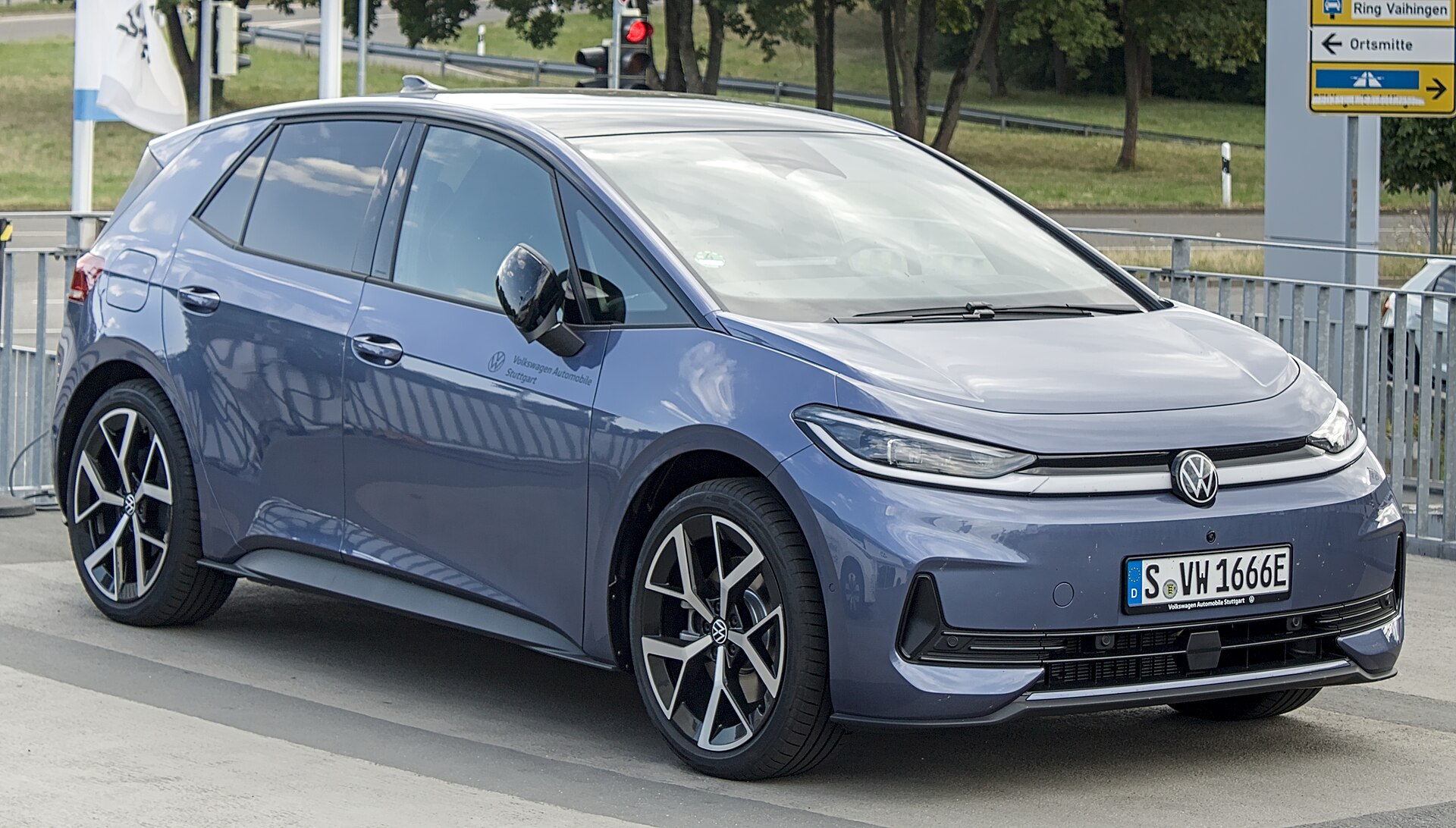
Volkswagen has put preliminary development of a battery Golf on hold. On 30 October 2026, Reuters reported that brand chief Thomas Schäfer wrote, in a memo the agency had seen, “We simply can’t afford this work right now.” Heise, the same day, reported an internal interview in which he said the project is not being dropped: “We’re pausing the work, not canceling it.” Neither account gives a price, a restart date, or a market where someone can order the car. A battery Golf is not for sale in the UK, the US, or the UAE on the back of this news.
Reporters are calling that future car the ID. Golf, and both say it was meant to be built at Wolfsburg. It is not the Volkswagen ID.3, the compact battery hatchback already in the catalogue and marked available in the United Kingdom. It is also not the Golf eHybrid or the Golf GTE. Those are plug-in hybrids. A petrol engine stays in the car, and a cable can charge the battery. They live on the plug-in hybrid list, not among battery models. Pausing the battery Golf does not take the plug-in Golfs off sale.
The number both Reuters and heise attach to the decision is about the factory, not a sticker price. Wolfsburg is about €300 million short of its cost target. Heise puts two limits on that figure. Schäfer was describing the plant’s shortfall for this year, not a published budget for the Golf programme, and he described Emden and Zwickau as meeting their own factory-cost targets. Volkswagen has not said whether design, testing, software, and supplier contracts have all stopped, or only some of them. Heise reported that he wants the work to start again as soon as the company can pay for it. There is still no date for that.
The calendar is where the accounts do not agree, and this piece will not collapse them into one year. Heise says the company now talks about the early 2030s. The same report says the internal target earlier this year was still around 2030, and that older reports had pointed to 2028 and then 2029. Reuters reported that Volkswagen’s works council does not treat the spending freeze as a delay: the council said the launch would not slip, and that lost time would be made up. Heise, citing German broadcaster NDR, carried the same works-council position. Helena Wisbert of Ostfalia University, quoted by heise, reads it the other way. Vehicle programmes run on a tight clock, she argued, and an early pause can still push the start of production back. That is her view. It is not a new date from Volkswagen.
The car would use Volkswagen’s Scalable Systems Platform. Reuters describes the ID. Golf as one of the first models planned for that architecture, and says the platform had already moved off an original 2026 target. Heise reports a build order at Wolfsburg: an electric T-Roc on the new platform first, the Golf after it. None of that puts a battery Golf in a showroom.
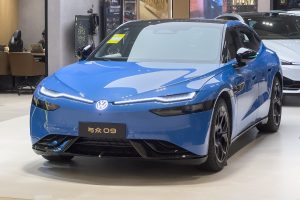
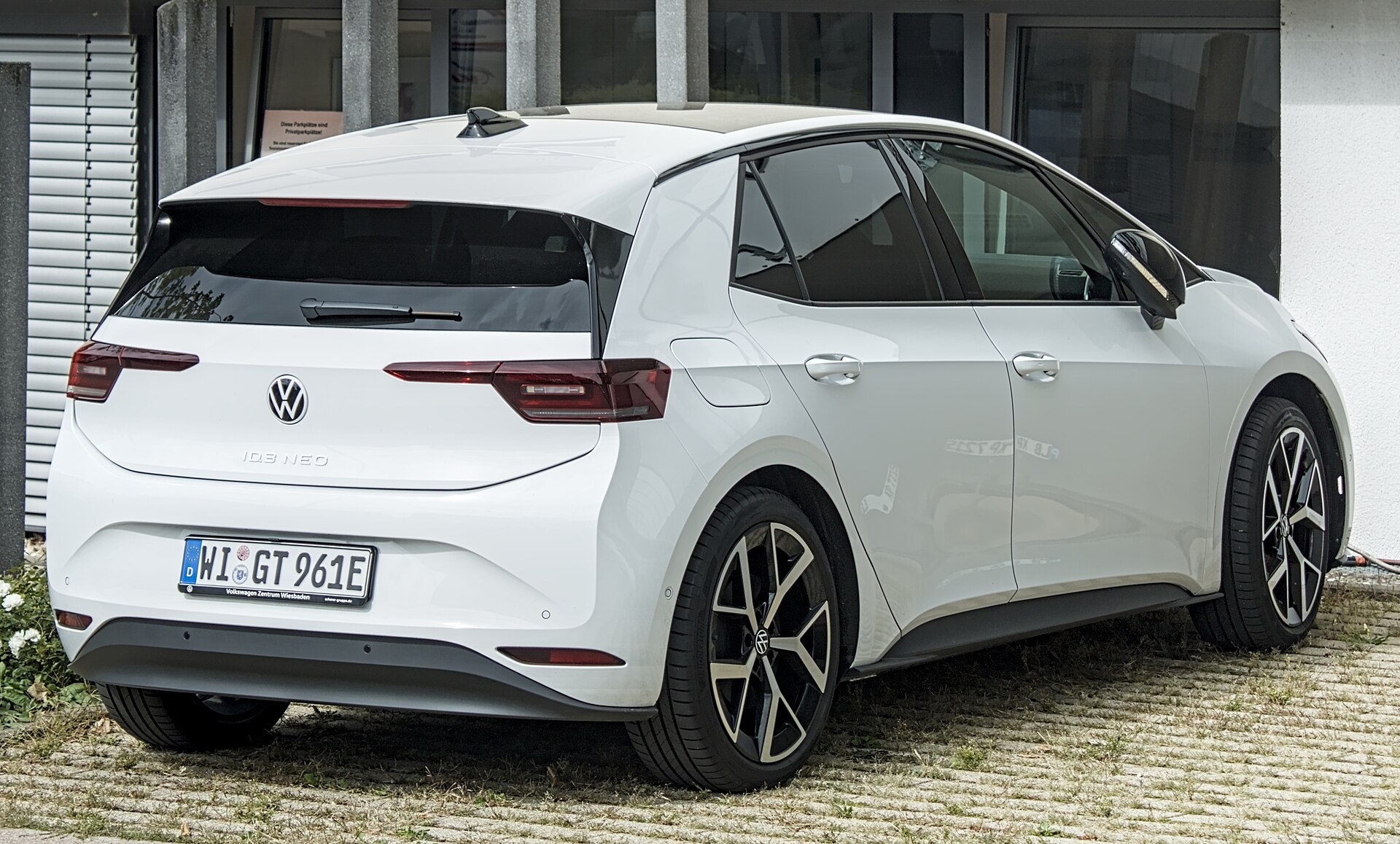
Anyone comparing cars that are actually listed should follow the powertrain. The 2025 ID.3 card is the battery hatchback, available in the United Kingdom. The headline trim on that page is the Pro S, at 79 kWh and 597 km. The same page also lists shorter-range Pure and Pro versions, so 597 km is not every ID.3. This pause does not revise those figures. The ID.3 GTX is a separate battery model, also marked available in the UK, with the card’s headline range at 604 km. The ID. Polo is a smaller battery hatchback marked announced in the UK, which is not the same as available. Heise reported that Volkswagen has about 150,000 orders for the ID. Polo and comparable Cupra and Škoda cars. This piece has not found a second source for that order count, so it stays the company’s figure as heise relayed it.
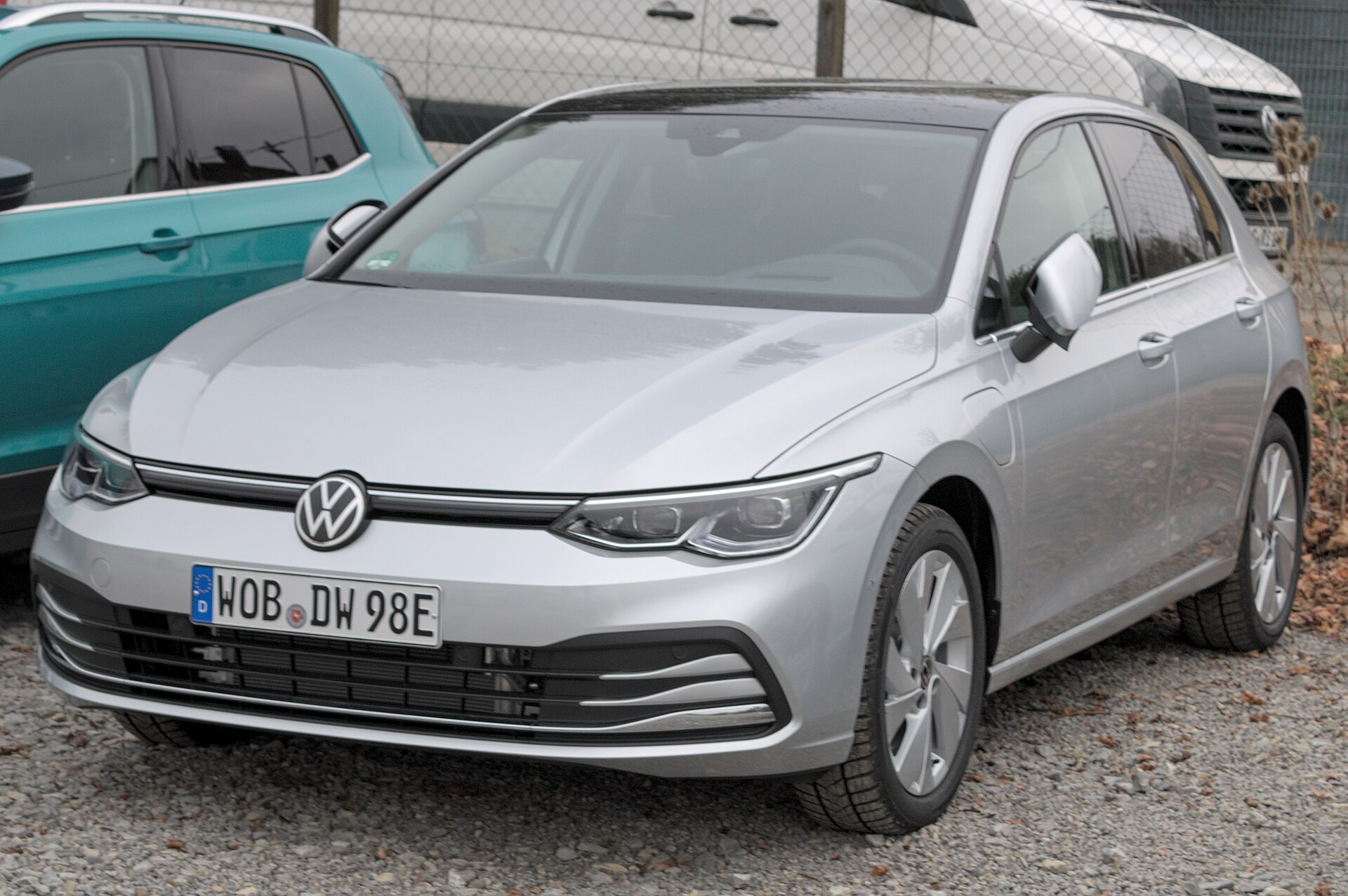
On the plug-in side, the Golf eHybrid card lists 143 km of electric range from a 19.7 kWh battery and 150 kW, and marks the car available in the UK. The Golf GTE card lists 131 km electric from the same 19.7 kWh pack, at 200 kW, also available in the UK. Those electric-range figures are the plug-in cards. They are not a range claim for the paused battery Golf.
The money story needs the same split. Reuters said that on Thursday Volkswagen reported its largest quarterly loss in more than a decade. Heise, citing NDR, describes the passenger-car brand rather than the whole group: a €182 million loss in the third quarter, and €813 million of earnings over nine months, a 1.3 percent return. Heise also puts core-brand-group operating earnings at €4.33 billion for those nine months, down from €4.72 billion a year earlier. In that account, finance chief David Powels said battery cars still do not match the margins of combustion-engine models, so a higher share of battery sales adds cost pressure. Heise lists the end of ID.4 production in Chattanooga among the one-off items in that profit picture. The Volkswagen ID.4 card linked here is the United States battery SUV. It is not a Golf.
For a UK shopper the split is already on the site. Battery Volkswagens, including the ID.3, sit on the Volkswagen brand page and in the hatchback group. Plug-in Golfs that still use petrol sit on the plug-in hybrid list. The UK catalogue is the market page. Friday’s reports do not add a pound price for a battery Golf, because that car is not for sale.