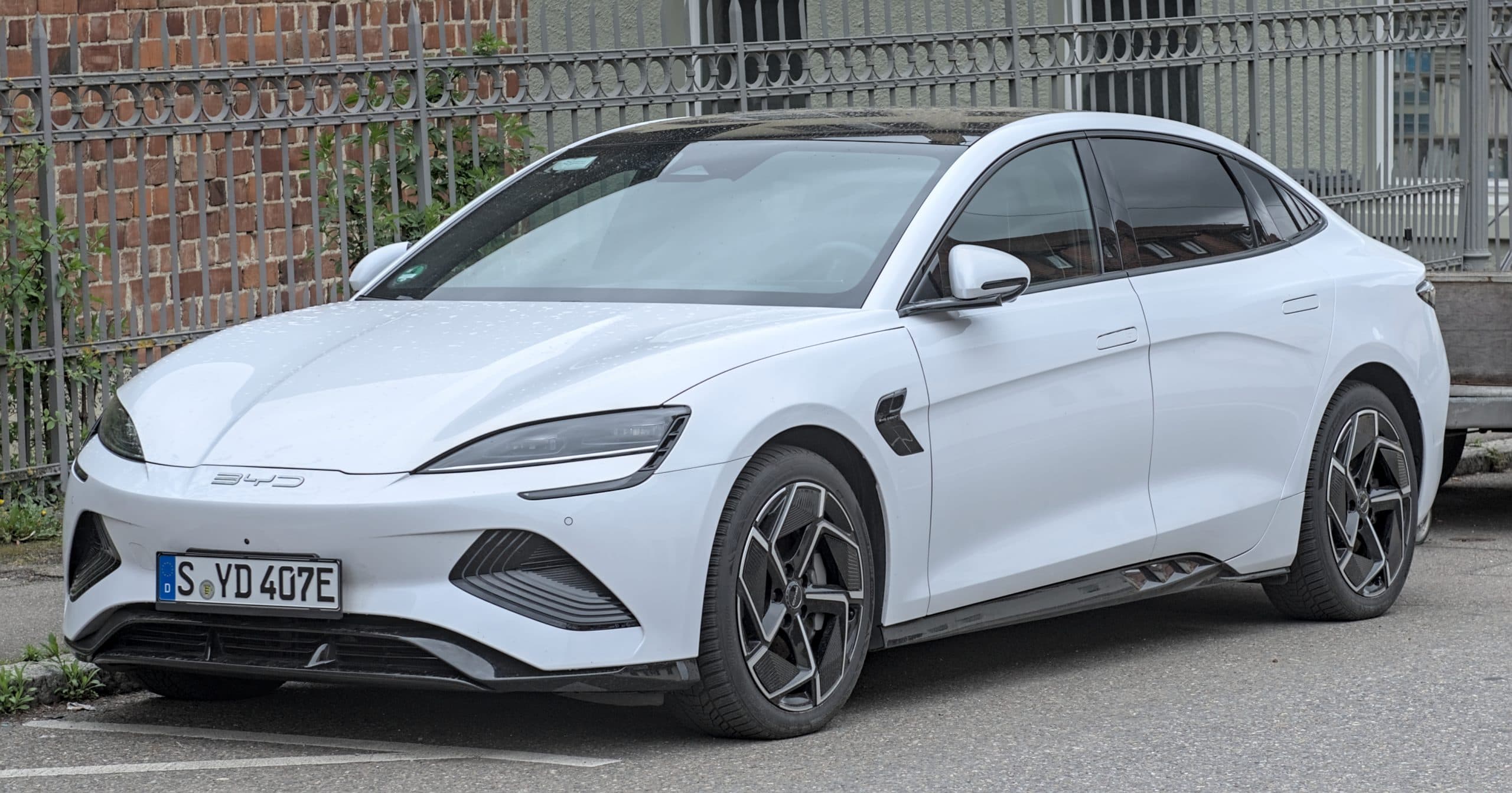

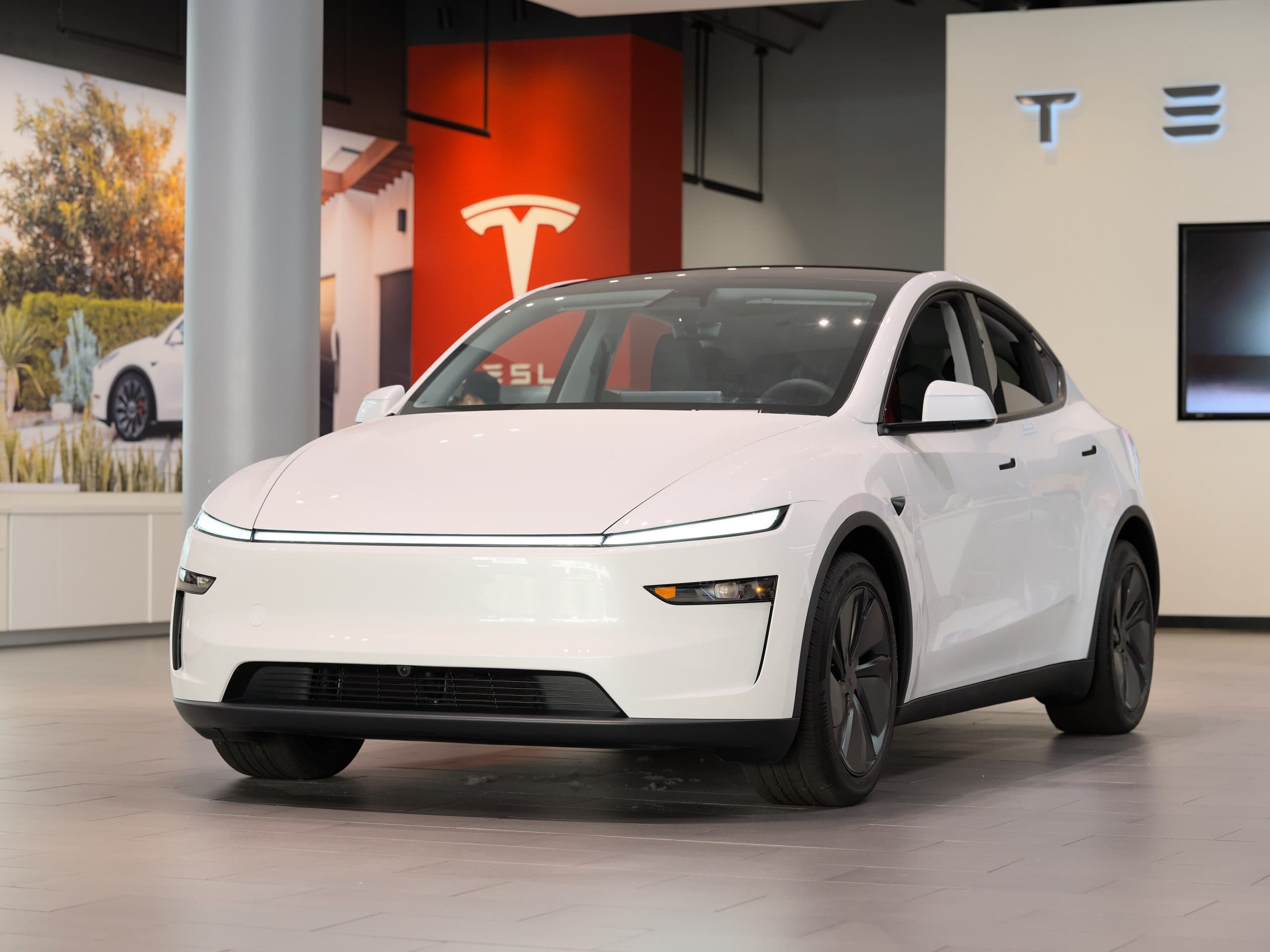
White BYD Seal electric sedan in a showroom with illuminated blue-purple background and glossy floor reflection.

Simple and Complete Analysis of Performance, Pricing, and the New Energy Ecosystem

The global car industry has reached a major turning point. The move toward electric and sustainable vehicles is now permanent. In 2025, BYD became the world’s largest producer of battery-electric vehicles (BEVs).

BYD delivered around 2.26 million fully electric vehicles, which is more than Tesla’s 1.64 million deliveries in the same year. This was the first time a Chinese car manufacturer took the global top position in electric vehicle sales.

BYD achieved this success through fast international expansion and a fully integrated supply chain. By producing its own batteries, motors, and electronics, BYD is able to control costs and offer competitive pricing across global markets.


The Technology Behind BYD’s Global Success

White BYD Seal electric sedan in a showroom with illuminated blue-purple background and glossy floor reflection.
BYD Seal electric sedan on display, showcasing sleek design and EV innovation.

BYD’s global growth is supported by its own battery systems, vehicle platforms, and software. These technologies focus on safety, efficiency, and performance.


Blade Battery and Cell-to-Body (CTB) Design

The Blade Battery is one of BYD’s biggest advantages. It uses Lithium Iron Phosphate (LFP) chemistry, which is safer and more heat-resistant than traditional NCA or NMC batteries.

BYD also uses Cell-to-Body (CTB) technology. This means the battery is built directly into the vehicle structure instead of being placed inside a separate case.

This design:

  • Improves vehicle strength
  • Increases cabin space
  • Lowers the center of gravity
  • Improves stability and safety

e-Platform 3.0 and the 8-in-1 Electric System

Most BYD global models, including the Atto 3 and Seal, are built on e-Platform 3.0.

This platform features the world’s first mass-produced 8-in-1 electric powertrain, which combines:

  • Electric motor
  • Motor controller
  • Battery management system
  • Power distribution system
  • Charging and conversion systems

By combining these parts into one unit, BYD achieves a total system efficiency of 89%, which is among the highest in the industry.


Global Performance and Market Competition

BYD-HAN

BYD offers vehicles across multiple segments. These models compete directly with both traditional car brands and modern electric vehicle manufacturers.


Performance Sedan Comparison: BYD Seal vs Tesla Model 3

The BYD Seal is designed to compete directly with the Tesla Model 3. BYD focuses on higher power output and a more traditional luxury interior.

Performance Comparison

FeatureBYD Seal (Performance AWD)Tesla Model 3 (Performance)
Maximum Power390 kW (523 hp)~393 kW (527 hp)
Maximum Torque670 Nm~660 Nm
0–100 km/h3.8 seconds3.3 seconds
Battery Type82.5 kWh LFP Blade~82 kWh NCA
Vehicle Weight~2,185 kg~1,844 kg

The Tesla Model 3 accelerates slightly faster because it is lighter. However, the BYD Seal offers a more comfortable ride thanks to Frequency Selective Damping (FSD), which handles road bumps better.

The Seal also features a 15.6-inch rotating touchscreen, which supports more flexible smartphone integration compared to Tesla’s fixed display.


Mainstream SUV Comparison: BYD Atto 3 vs Volkswagen ID.4

In the popular crossover SUV category, the BYD Atto 3 competes with the Volkswagen ID.4 by offering more power and lower pricing.

SUV Comparison

FeatureBYD Atto 3VW ID.4
Starting Price (China)~$19,430~$27,790
Battery Capacity50 kWh55 kWh
Power Output150 kW (201 hp)125 kW (167 hp)
0–100 km/h7.3 seconds8.5 seconds
WLTP Range430 km400 km

The Atto 3 provides stronger acceleration and higher power. The ID.4 offers more cargo space and uses rear-wheel drive, which some drivers prefer for handling.


Global Pricing Strategy Across Markets

BYD prices its vehicles differently in each region. Prices depend on local taxes, import duties, government subsidies, and trim levels.

China has the lowest prices because BYD manufactures most components locally. Prices are higher in Europe, Australia, and other regions due to shipping costs and higher standard features.

BYD Seal 2025 Global Pricing (USD Equivalent)

CountryStarting PriceTop Trim Price
China$29,500$39,300
Germany$30,000$38,000
United Kingdom$35,500$47,000
United States (Estimated)$33,000$42,000
Australia$47,000$58,000

Budget EVs and Entry-Level Market Disruption

BYD Seagull

The BYD Seagull, also known as Dolphin Mini or Dolphin Surf in some markets, is BYD’s strongest weapon in the global EV price war.

  • In China, prices start as low as $7,800
  • In Europe, the Dolphin Surf starts around $25,000 (£18,650)

Despite its low price, the Seagull offers a 203-mile WLTP range, making it much cheaper than similar European electric cars.


Luxury and Extreme Performance: The Yangwang Brand

To compete in the luxury and super-performance segment, BYD launched the Yangwang sub-brand.

Yangwang U8

  • Ultra-luxury off-road electric SUV
  • Uses four independent electric motors
  • Can perform 360-degree tank turns
  • Can float and move in water during emergencies

Yangwang U9

  • High-performance electric super-coupe
  • Holds a global production EV speed record of 472.41 km/h (293.5 mph)
  • The “Xtreme” version produces 2,220 kW (around 3,000 horsepower)
  • Accelerates from 0–100 km/h in 2.36 seconds

Charging Infrastructure and the Future of EVs

BYD’s next major focus is solving one of the biggest EV concerns: charging time.

The new Super e-Platform uses a 1,000V high-voltage system. This platform supports Megawatt Flash Charging.

With this technology:

  • Charging speed reaches 10C
  • Vehicles can gain 400 km of range in just five minutes
  • Charging time becomes similar to refueling a petrol car

Conclusion: BYD’s Global Shift in the Auto Industry

BYD has successfully moved from being a regional player to becoming a global electric vehicle leader.

Its product range covers every segment:

  • Affordable EVs like the Seagull
  • Mainstream cars like the Atto 3 and Seal
  • Ultra-luxury and high-performance models like the Yangwang U8 and U9

By expanding local production in Europe, Southeast Asia, and Latin America, BYD can reduce tariffs and improve supply chains. This strategy will help the company keep prices low and maintain strong global competitiveness.

As a result, BYD is well positioned to remain at the top of the global electric mobility industry for years to come.