Hyundai Motor UK priced the updated IONIQ 6 on 29 October 2026. Orders are open, and the company says the first customer deliveries are in early 2027. This is a battery sedan. The cheapest car on the new list is the Premium, with an 84 kWh battery and rear-wheel drive, at £33,240 on the road. That price already includes the £3,750 Electric Car Grant. Hyundai claims up to 422 miles for it, at 4.6 miles per kWh.
WhichEV reported the same on-the-road ladder on 30 October. Only two versions qualify for the grant: Premium rear-wheel drive at £33,240, and N Line rear-wheel drive at £36,240. Add the £3,750 back and those two sit at £36,990 and £39,990 before the subsidy. The other three do not receive it. N Line all-wheel drive is £43,490. N Line Evo rear-wheel drive is £43,270. N Line Evo all-wheel drive is £46,770.
The grant changes the gaps shoppers will see. From the N Line rear-wheel drive at £36,240 to the N Line all-wheel drive at £43,490 is £7,250 on the advertised prices. The rear-drive N Line would be £39,990 before the grant, and the all-wheel-drive N Line is listed without it, so the underlying step is £3,500. The same £3,500 separates the two Evo models, and neither of those is eligible. The rear-drive Evo, at £43,270, also sits only £220 under the mid-trim all-wheel-drive car. At that point the choice is extra equipment against the quicker drivetrain, not a large price jump.
| UK trim | On the road | Hyundai’s range claim | 0–62 mph |
|---|---|---|---|
| Premium 84 kWh rear-wheel drive | £33,240, grant included | 422 miles | 7.4 seconds |
| N Line 84 kWh rear-wheel drive | £36,240, grant included | 364 miles | 7.4 seconds |
| N Line 84 kWh all-wheel drive | £43,490 | 354 miles | 5.1 seconds |
| N Line Evo 84 kWh rear-wheel drive | £43,270 | 364 miles | 7.4 seconds |
| N Line Evo 84 kWh all-wheel drive | £46,770 | 354 miles | 5.1 seconds |
Range is not a single number for the nameplate. Premium uses 18-inch wheels and carries the 422-mile claim. Both rear-drive N Line grades use 20-inch wheels and are quoted at 364 miles and 4.2 miles per kWh. They keep Premium’s 229 PS (168 kW) and its 7.4-second 0–62 mph time, so the sportier trim is not a power upgrade. All-wheel drive raises output to 325 PS (239 kW), cuts 0–62 mph to 5.1 seconds, and is quoted at up to 354 miles and 4.0 miles per kWh. Hyundai lists 115 mph as the top speed on every version. These are the manufacturer’s figures. WhichEV said it had not road-tested them.
On GetEVCar, the 2026 Hyundai IONIQ 6 card lists an 84 kWh rear-drive version at 168 kW and 680 km. That range matches the 422-mile Premium claim, within ordinary mile-to-kilometre rounding. The same card lists an 84 kWh all-wheel-drive version at 650 km. Hyundai’s 29 October UK table does not. It quotes 354 miles, about 570 km, for the N Line and N Line Evo all-wheel-drive cars. For a car on this UK order form, use the October price release. The card’s 63 kWh rear-drive trim, listed at 521 km, is not on that UK price list either. The pound figures are UK on-the-road prices. The card also marks the car available in the UAE, but this announcement does not set a dirham price.
The IONIQ 6 N is a different model. GetEVCar lists it as announced in the UK, and it is not one of these five trims. Shoppers comparing Hyundai battery cars already in the catalogue can also look at the 2026 IONIQ 5, which is a separate body, and at the wider Hyundai range. The IONIQ 6 priced here is a sedan.
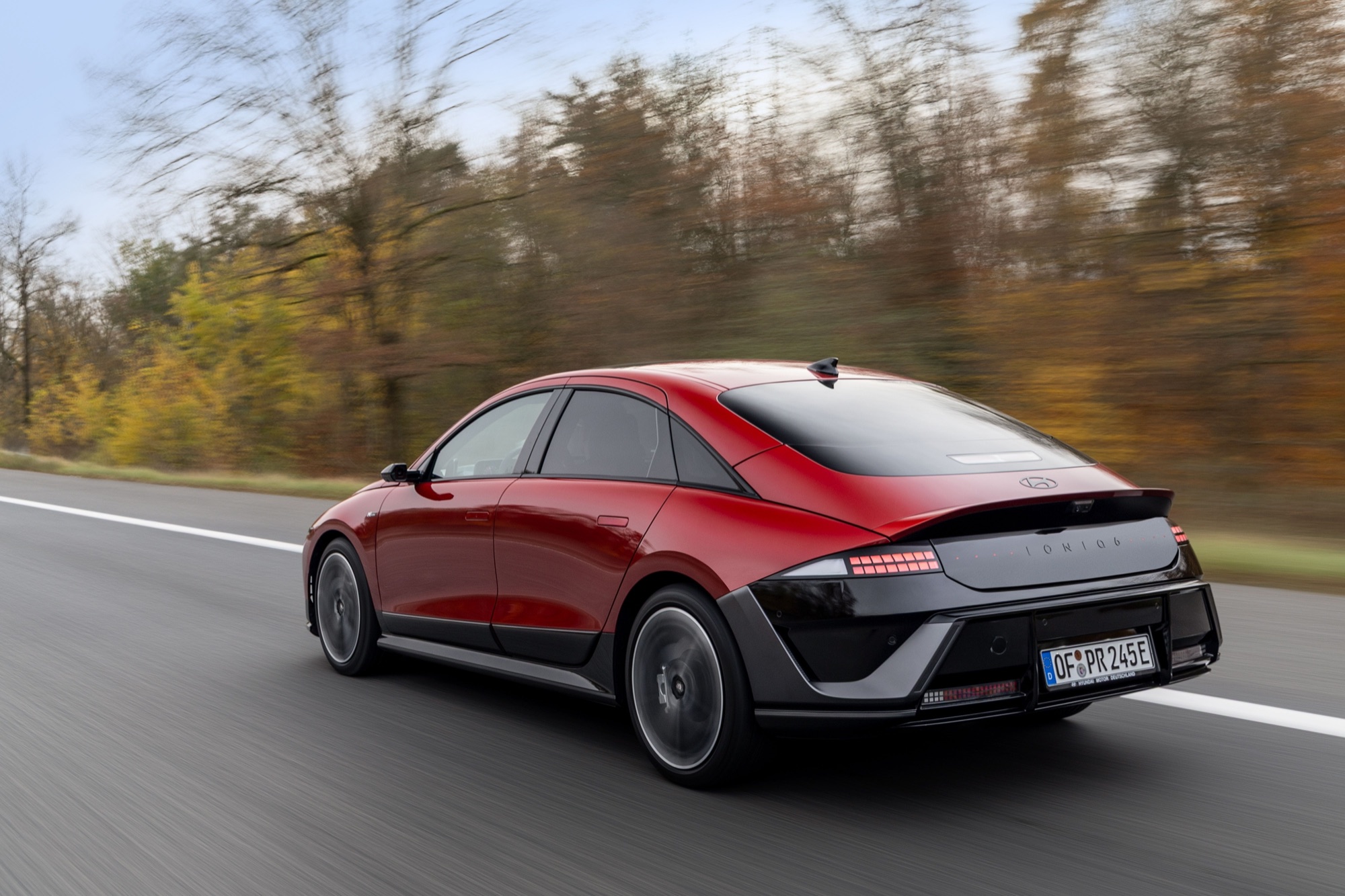
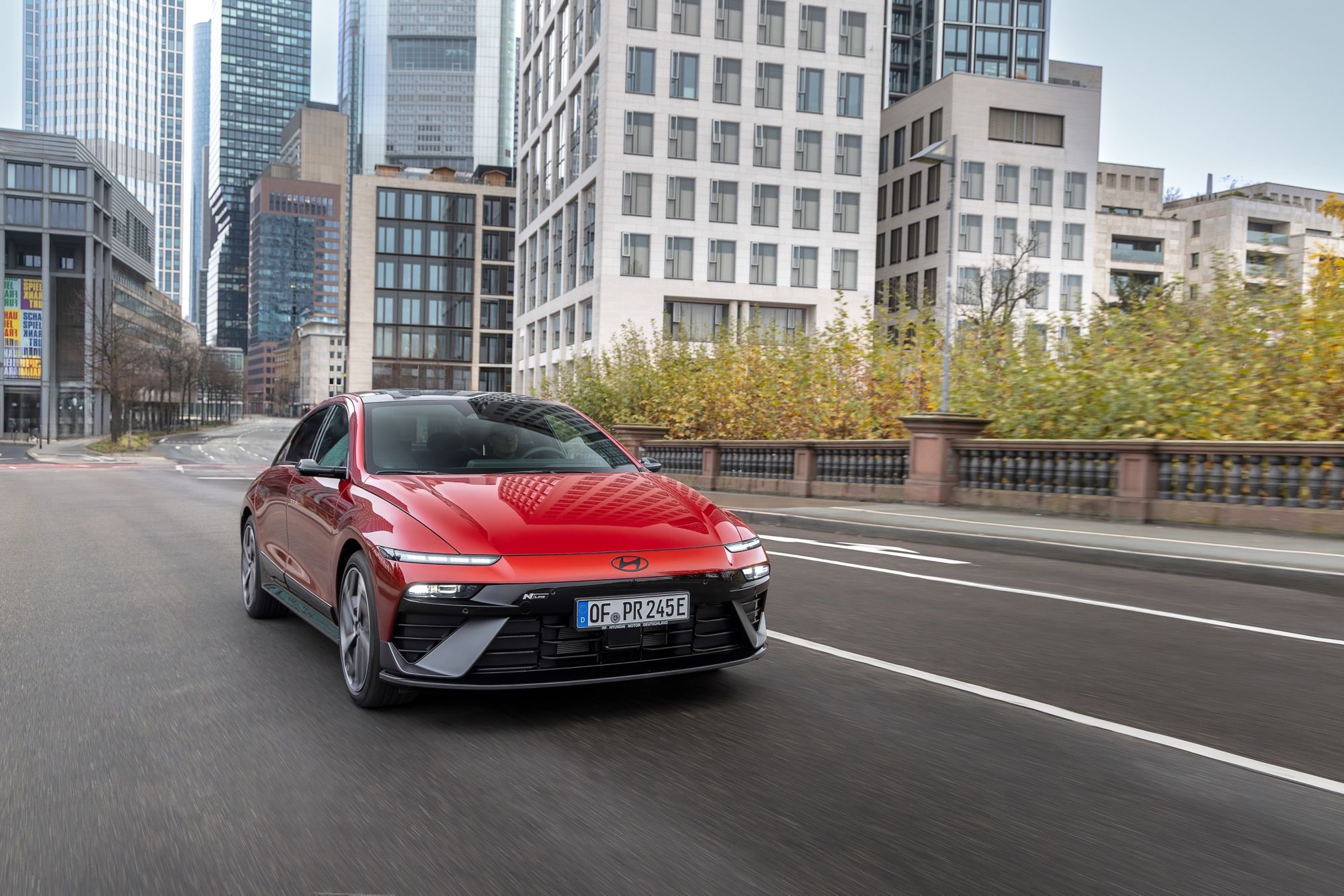
Hyundai has raised the bonnet, sharpened the nose, and carried the black lower-body trim into the doors. At the back, an extended ducktail replaces the previous spoiler. The company says the restyle is meant to keep the car aerodynamically efficient. The photographs released with the UK prices are of that European N Line press car.
Hyundai’s charging table gives the same estimates for every version: about 18 minutes from 10 to 80 percent on a 350 kW charger, about 1 hour 20 minutes on a 50 kW charger, and about 7 hours 35 minutes from empty to full on an 11 kW supply. The equipment list in the same release also prints a “10.5 kWh” three-phase onboard charger. Those two lines do not state the same figure, so this article is not collapsing them into one confirmed charging power. A heat pump and battery pre-conditioning are on Premium, not saved for the top trim. An interior vehicle-to-load outlet is standard. The exterior adaptor is on Evo.
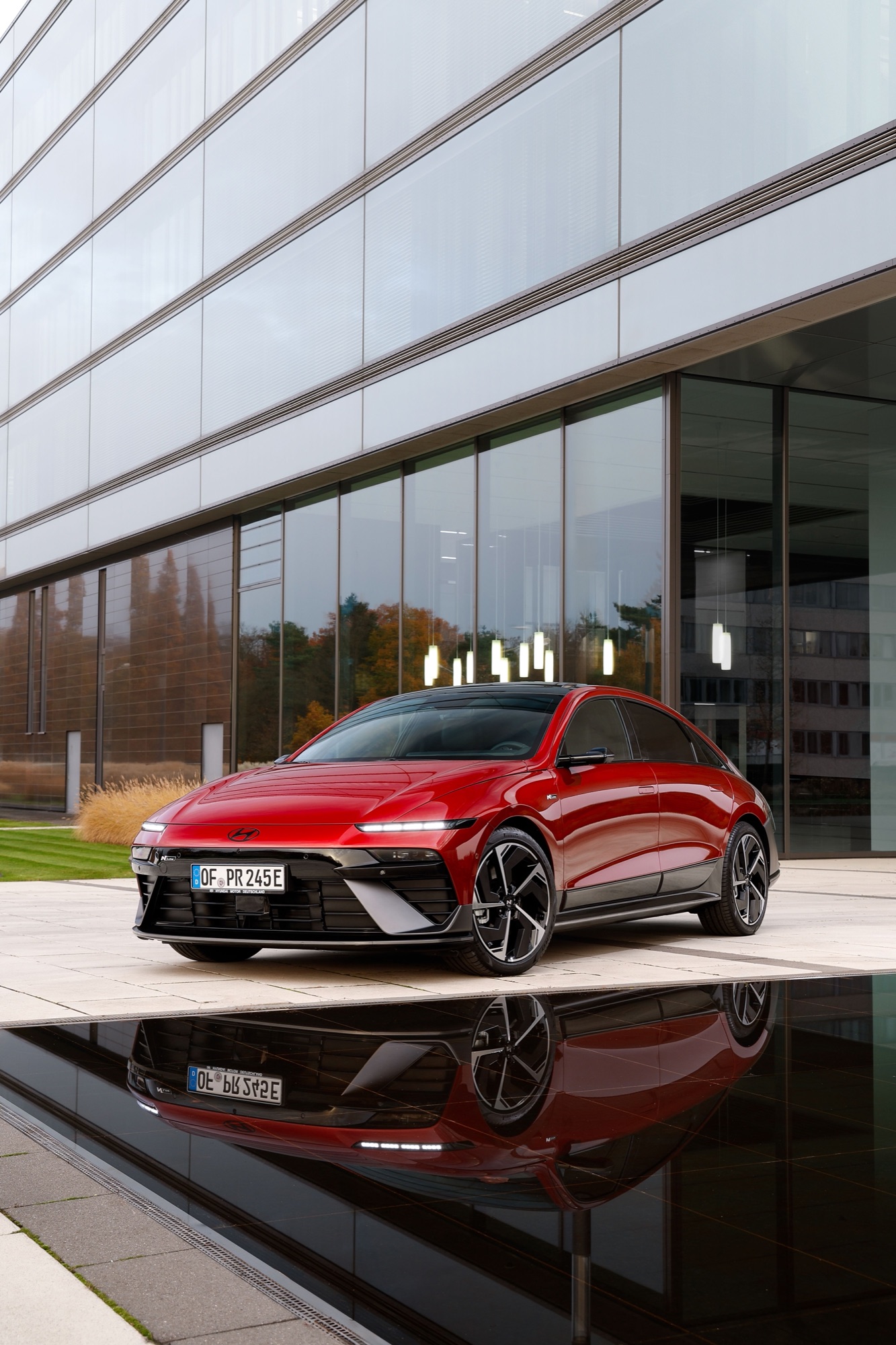
Premium’s list includes 18-inch alloys, flush door handles, dual-zone climate control, heated front seats, a heated steering wheel, a 12.3-inch navigation screen, wireless phone charging and over-the-air updates. Matrix LED headlights, smart cruise control with stop-and-go, Highway Drive Assist 2 and blind-spot collision avoidance are on that grade as well. N Line adds £3,000 after the grant and spends it on appearance and comfort: 20-inch wheels, a black Hyundai badge, gloss-black bumpers, an N steering wheel, red stitching, and heated outer rear seats. Output stays at 229 PS. Evo adds leather and suede, front relaxation seats, ventilated front seats, a sunroof, a head-up display, a surround-view monitor, remote parking, a digital key, a Bose audio system and the exterior vehicle-to-load adaptor. Digital side mirrors are an option on Evo, not standard.
Hyundai’s dimension table puts overall length at 4,925 to 4,935 mm, with a 2,950 mm wheelbase. Boot space is 401 litres, with a further 45 litres under the bonnet, and braked towing is 1,500 kg on each version. Ultimate Red metallic is included. Other metallic and pearl paints are £750, and matte paints are £1,250. Hyundai marks Transmission Blue Matte, Celadon Grey Matte and Sunset Brown Pearl as new, and not every colour is offered on the N Line grades. The vehicle warranty is five years with unlimited mileage. The high-voltage battery is covered for eight years or 100,000 miles. Ashley Andrew, president of Hyundai and Genesis UK, described the restyle as more dynamic and said the grant makes the car easier to reach. That is the company’s case for the price cut. The range and charge-time figures remain Hyundai’s own claims.