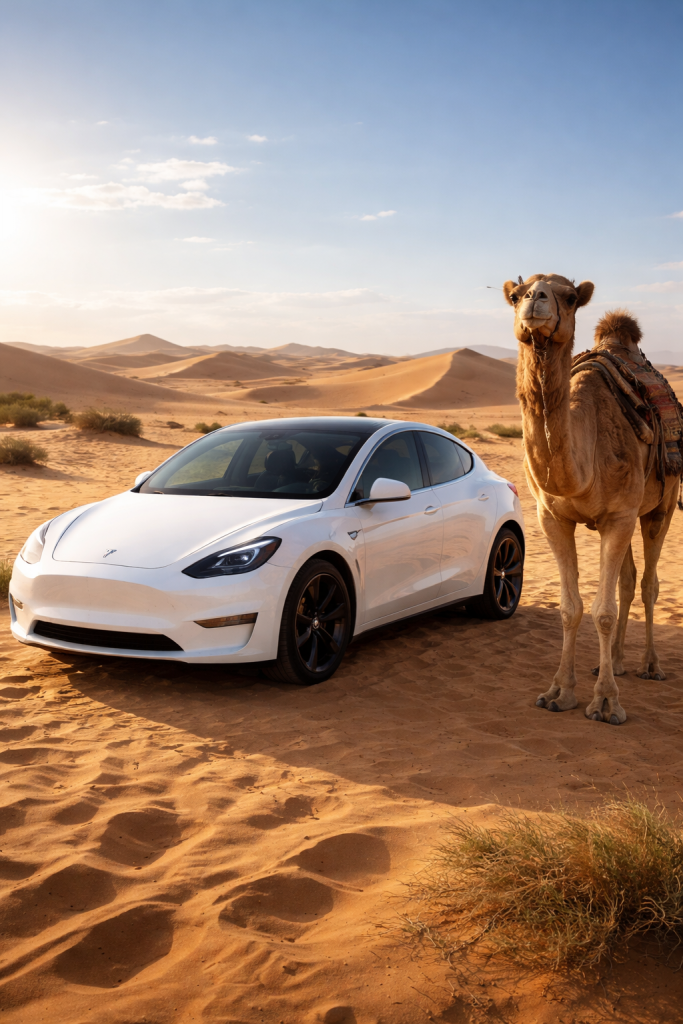

The shift to electric vehicles (EVs) is accelerating worldwide, and regions like the UAE, Qatar, and the southwestern US are no exception. With temperatures often soaring above 45°C, intense solar radiation, and frequent sandstorms, desert environments pose unique challenges to EV battery packs, thermal systems, and sensors. But do these conditions make EVs impractical? Modern engineering suggests the opposite: well-designed EVs with advanced liquid cooling and robust protections not only survive but can outperform traditional gasoline cars in efficiency—provided owners follow smart habits.
Battery Degradation in Extreme Heat: The Science and Real Impact
Lithium-ion batteries thrive between 15–35°C. In desert summers, prolonged exposure above 40°C speeds up chemical reactions, primarily thickening the Solid Electrolyte Interphase (SEI) layer on the anode. This “calendar aging” happens even when parked, consuming lithium and raising resistance.
Studies from Qatar’s QEERI highlight how high temperatures accelerate capacity fade, with different battery chemistries showing varying resilience. Real-world data shows EVs in hot climates degrade faster—around 1.8–2% per year on average—but modern systems keep this manageable. In the UAE, owners report 15–20% reduced lifespan if parked in direct sun without precautions, but active cooling limits this significantly.
Range Impact from Heat and AC Use
| Ambient Temperature | Typical Range Reduction | Main Factors |
|---|---|---|
| 20–30°C | Baseline (0%) | Optimal operation |
| 35°C | 8–13% | AC and battery cooling load |
| 40–50°C | 15–20% | Accelerated SEI growth, higher cooling demand |
| 60°C+ (parked in sun) | 20–30%+ | Risk of permanent damage if unmanaged |
In UAE summers, a Tesla Model 3 Long Range (WLTP ~600+ km) often delivers 400–500 km realistically with AC blasting—better in “winter” months.
EV Battery Cooling: Challenges and Solutions | Laserax
Advanced Cooling: The Key to Desert Survival
Older air-cooled EVs (like early Nissan Leaf) struggle when ambient air hits 45°C+. Today’s leaders—Tesla, BYD, Polestar—use liquid cooling loops that integrate battery and cabin HVAC for precise temperature control.
Tesla’s system, with bypass valves and high-efficiency heat exchangers, handles fast-charging heat spikes (>12 kW) while keeping cells optimal. Interestingly, cooling penalties are milder than winter heating: an 8% range hit at 35°C vs. 28% at -7°C.
A novel thermal management system for lithium-ion battery modules …
Dust, Sand, and Sensor Challenges
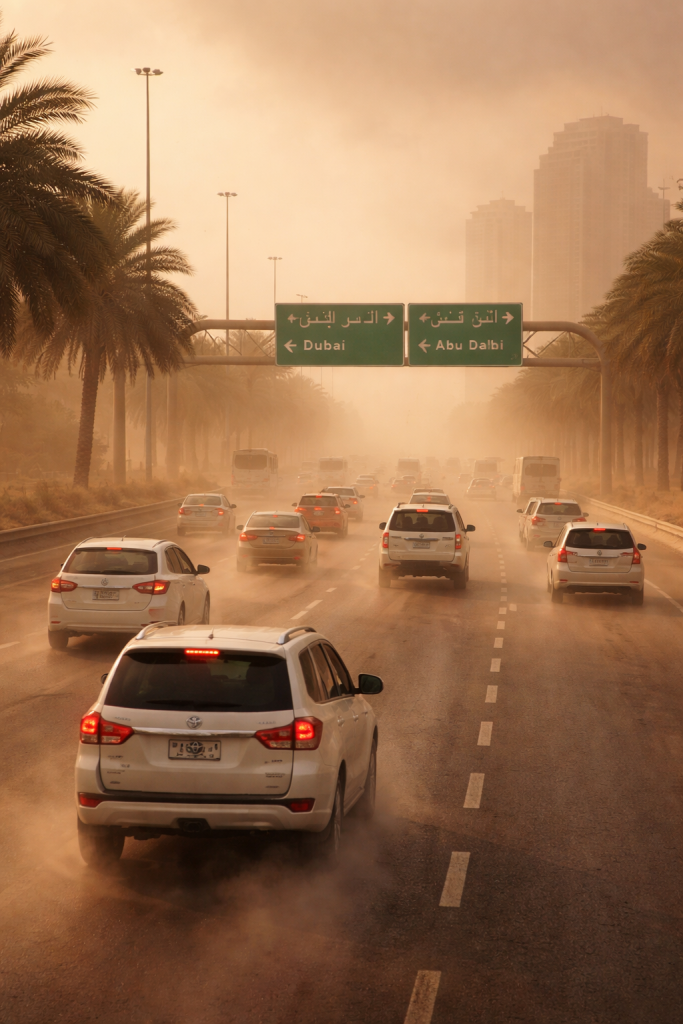
Sandstorms deposit abrasive particles that clog radiators, insulate heat exchangers, and coat sensors. Radar (76–81 GHz) suffers attenuation:
| Contaminant Type | Radar Attenuation | Range Impact |
|---|---|---|
| Dry Dust | 0.5–3 dB | ~10% reduction |
| Sand Accumulation | 1–5 dB | 10–20% |
| Wet/Moist Dust | 15–20 dB | >50% (critical) |
Coastal humidity + dust worsens this. Solutions include hydrophobic coatings and ultrasonic cleaners.
Mighty Dust Storm Drifting Toward Southeastern U.S., Even Self …
Charging Infrastructure in the Heat
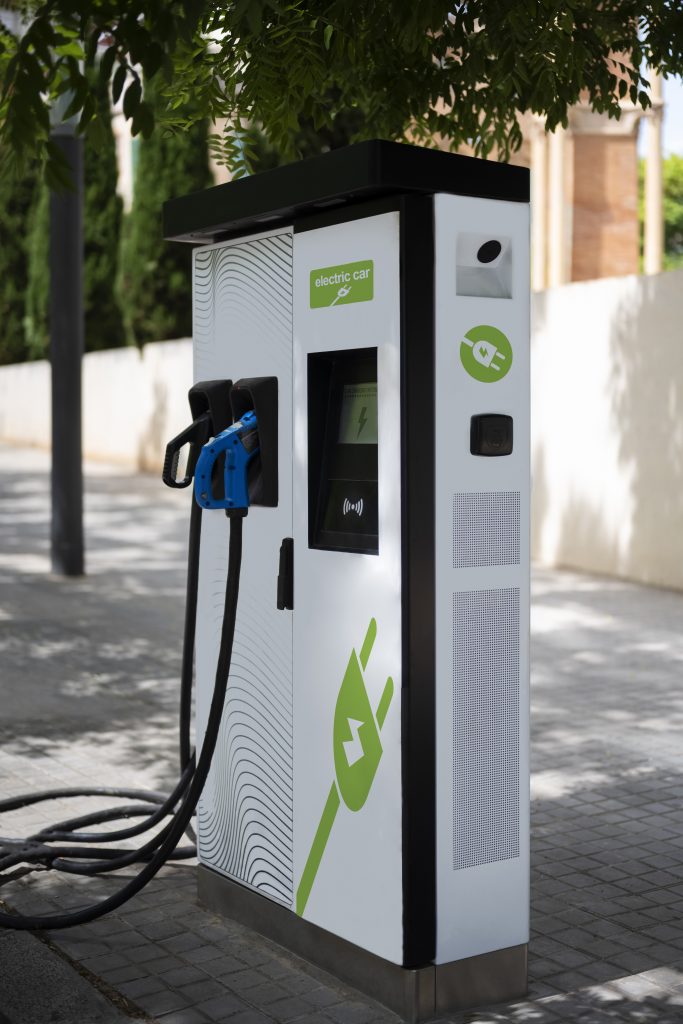
UAE chargers (DEWA, ADNOC) feature climate-controlled enclosures, but peak summer derates output 20–30%. As of 2025, unified tariffs:
| Charger Type | Rate (AED/kWh + 5% VAT) | Approx. Cost for 60 kWh Pack |
|---|---|---|
| AC (Slow) | ~0.735 | ~44 AED |
| DC (Fast) | ~1.26 | ~76 AED |
| Home | 0.30–0.45 | 18–27 AED |
Economics: Lower TCO Despite Challenges
EVs save on fuel and maintenance—no oil changes, fewer brakes thanks to regen. Over 5 years, savings of $6,000–10,000 are common. Insurance is 20–35% higher due to repair costs, but dropping as the market matures.
Maintenance Comparison
| Component | ICE (Desert) | EV (Desert) |
|---|---|---|
| Engine/Motor | Frequent oil, plugs | None |
| Cooling | High load, frequent flushes | Longer intervals |
| Filters | Clogged by sand | Cabin/battery filters |
| Brakes | High wear | Minimal (regen) |
Real-World Tips for Desert EV Owners
- Precondition while plugged in (uses grid power).
- Charge 20–80%, avoid 100% in heat.
- Park shaded; use covers.
- Clean filters often.
- Night charging for cooler temps.
Conclusion: EVs Are Thriving in the Desert
Data from thousands of EVs shows heat accelerates degradation, but advanced thermal management makes modern models resilient—and often superior—in hot climates. With expanding infrastructure and falling costs, EVs are not just viable for Dubai, Phoenix, or Riyadh; they’re the smarter long-term choice. The desert sun powers the grid too—perfect synergy for electrified mobility.