Introduction
The transition toward sustainable mobility in the United Arab Emirates (UAE) is fundamentally anchored in the strategic development of a robust and economically viable electric vehicle (EV) charging infrastructure. Aligned with the UAE Net Zero 2050 Strategy and the Dubai Green Mobility Strategy 2030, the country is steadily transforming its transport sector from fossil-fuel dependency to a software-driven, electrified ecosystem.
This shift is not simply consumer-led—it is the outcome of a highly regulated, subsidized, and technology-enabled framework designed to lower adoption barriers while ensuring long-term grid scalability. This article presents a comprehensive market analysis of the UAE’s EV charging landscape for 2025–2026, focusing on pricing, technology, regulatory frameworks, and strategic accessibility across all emirates.
Regulatory Framework and Standardized Pricing Models
A major inflection point arrived with Cabinet Resolution No. 81, which introduced a unified national pricing framework for EV charging services. Prior to this, the market was fragmented—free charging at some locations, subsidized utility pricing at others, and inconsistent commercial tariffs that created confusion for consumers.
Standardized pricing now ensures transparency, fairness, and predictability, while encouraging private-sector participation in charging infrastructure development.
National Charging Tariffs (Public Networks)
| Charging Technology | Base Rate (AED/kWh) | Rate incl. VAT (AED/kWh) |
|---|---|---|
| AC (Slow / Level 2) | 0.70 | 0.735 |
| DC (Fast / Express) | 1.20 | 1.26 |
Key Insight: Even under a paid charging model, EV owners save ~73% in energy costs compared to internal combustion engine (ICE) vehicles.
Dubai: DEWA Green Charger Initiative
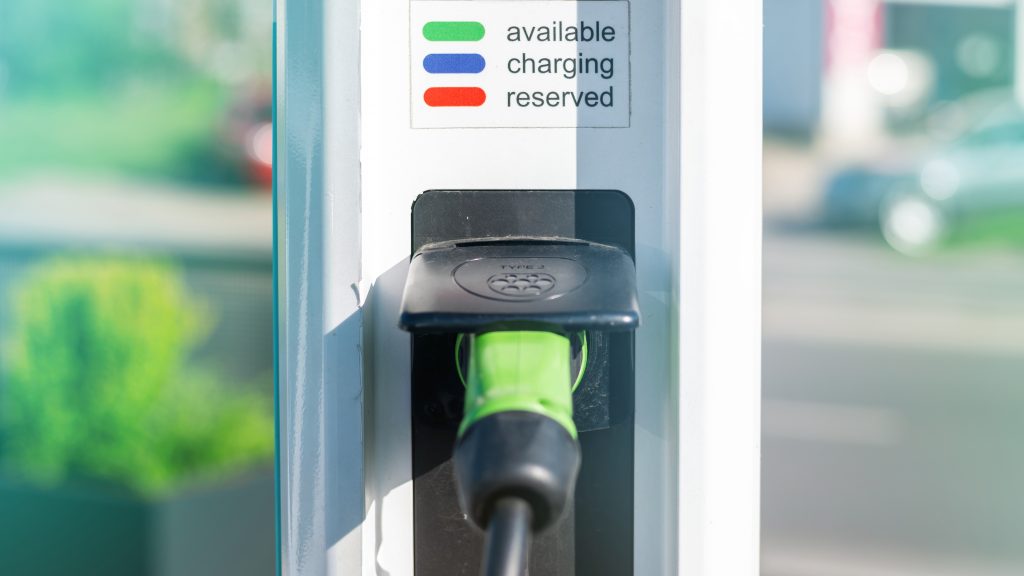
Dubai leads EV adoption through the DEWA Green Charger Initiative, launched in 2015.
Network Scale
- 400+ chargers
- ~730–740 charging points
- Expansion target: 1,000 public chargers by 2025
Registration & Account Setup
Residents benefit from seamless integration between RTA and DEWA.
Requirements:
- Refundable security deposit: AED 500
- Green Charger card delivery: AED 20 + VAT
- Activation: Within 1 hour via DEWA Smart App / DubaiNow
Most users charge via QR code scanning using the DEWA Smart App.
DEWA Guest Mode (Tourists & Non-Registered Users)
Guest Mode enables pay-as-you-go charging without account registration.
Time-Based Charging Packages
| Charger Type | Duration | Cost incl. VAT (AED) |
|---|---|---|
| AC Wallbox | 30 min | 5.08 |
| AC Wallbox | 60 min | 10.16 |
| DC 50 kW | 30 min | 11.55 |
| DC 150 kW | 60 min | 69.30 |
Note: Final billing is adjusted based on actual energy consumed, making faster-charging vehicles more cost-efficient.
Abu Dhabi: ADNOC, TAQA & the E2GO Network
Abu Dhabi’s EV strategy centers on large-scale public–private collaboration.
E2GO Joint Venture
- Partners: ADNOC Distribution & TAQA
- Investment: USD 200 million
- Target: 70,000 charging points by 2030
ADNOC Fast-Charging Hubs
- 150 kW DC chargers
- 30 minutes ≈ 300 km range
- Current tariff: AED 1.26 per kWh
Overstay & Idle Fees
- Overstay beyond 80% or 40 minutes: ~AED 1.05 per minute
- Designed to reduce congestion and increase charger availability
Residential Charging in Abu Dhabi
| Billing Phase | Cost |
|---|---|
| Before sub-meter | AED 92 flat monthly fee |
| After sub-meter | ~AED 0.30 per kWh |
All residential chargers must be registered with ADDC or AADC.
Northern Emirates: UAEV Network
The UAEV initiative covers Sharjah, Ajman, Ras Al Khaimah, and Fujairah.
Key Features
- Unified national access
- Target: 1,000 chargers by 2030
- AC: AED 0.70/kWh, DC: AED 1.20/kWh (+ VAT)
- Pay-as-you-go via app (no deposit)
The UAEV app enables live availability, QR charging, and instant payment.
Tesla Charging Ecosystem in the UAE
Tesla Superchargers
- Power output: Up to 250 kW
- Tariff: AED 1.20 per kWh
Idle & Congestion Fees
| Condition | Fee (AED/min) |
|---|---|
| Idle (<50% occupancy) | 2.00 |
| Idle (>50% occupancy) | 4.00 |
| Congestion (>80% SOC) | 2.00 |
Some Superchargers are now accessible to non-Tesla CCS vehicles via the Tesla app.
Destination Charging
- 80+ locations
- Typically free for hotel/mall patrons
Home Charging: The Most Economical Option
Residential Electricity Tariffs
| Emirate | Provider | Tariff Range (AED/kWh) |
|---|---|---|
| Dubai | DEWA | 0.23 – 0.48 |
| Abu Dhabi | ADDC / Etihad WE | 0.26 – 0.31 |
| Sharjah | SEWA | 0.23 – 0.38 |
A 50 kWh home charge typically costs AED 11–24, far below public charging.
Installation Costs
- Home charger installation: AED 2,000–5,000
- Off-peak charging (10 PM–8 AM): 20–30% savings
Government Incentives for EV Owners (2025–2026)
| Incentive Category | Dubai | Abu Dhabi |
|---|---|---|
| Road Tolls | Free Salik tag | Darb toll exemption |
| Parking | Free green-zone parking | Free designated spots |
| Registration | ~15% discount | 15% discount (3 years) |
| Import Duty | 0% until Dec 2025 | 0% until Dec 2025 |
| Financing | Green auto loans | Green auto loans |
Emerging Charging Networks & Innovation
- ForEVo: 180 kW ultra-fast chargers (0–80% in ~15 min)
- Charge&Go (e&): Terra 360 chargers (100 km in 3 minutes)
- GreenParking: Smart chargers integrated into real estate developments
Technical Standards
- AC: Type 2
- DC: CCS Type 2
- Efficiency loss: ~10–20% (higher in summer due to cooling systems)
Key Charging Locations (Highlights)
Dubai
- Dubai Mall, Mall of the Emirates, Expo City
- DEWA HQ, RTA HQ, Global Village
Abu Dhabi & Al Ain
- ADNOC Corniche, Masdar City, Yas Mall
- Sheikh Zayed Grand Mosque, Ferrari World
Conclusion: Strategic Affordability for the Modern Driver
The UAE’s EV charging ecosystem has evolved into a regulated, scalable, and economically compelling network. While free public charging has largely phased out, standardized tariffs ensure clarity and sustained affordability.
Key Takeaways:
- Public charging remains ~73% cheaper than ICE fuel
- Home charging offers the lowest cost per km
- Incentives significantly reduce total ownership cost
- Ultra-fast charging is eliminating range anxiety
With nationwide interoperability, strong government backing, and rapid private-sector innovation, EV adoption in the UAE is no longer a future vision—it is a present-day economic reality.