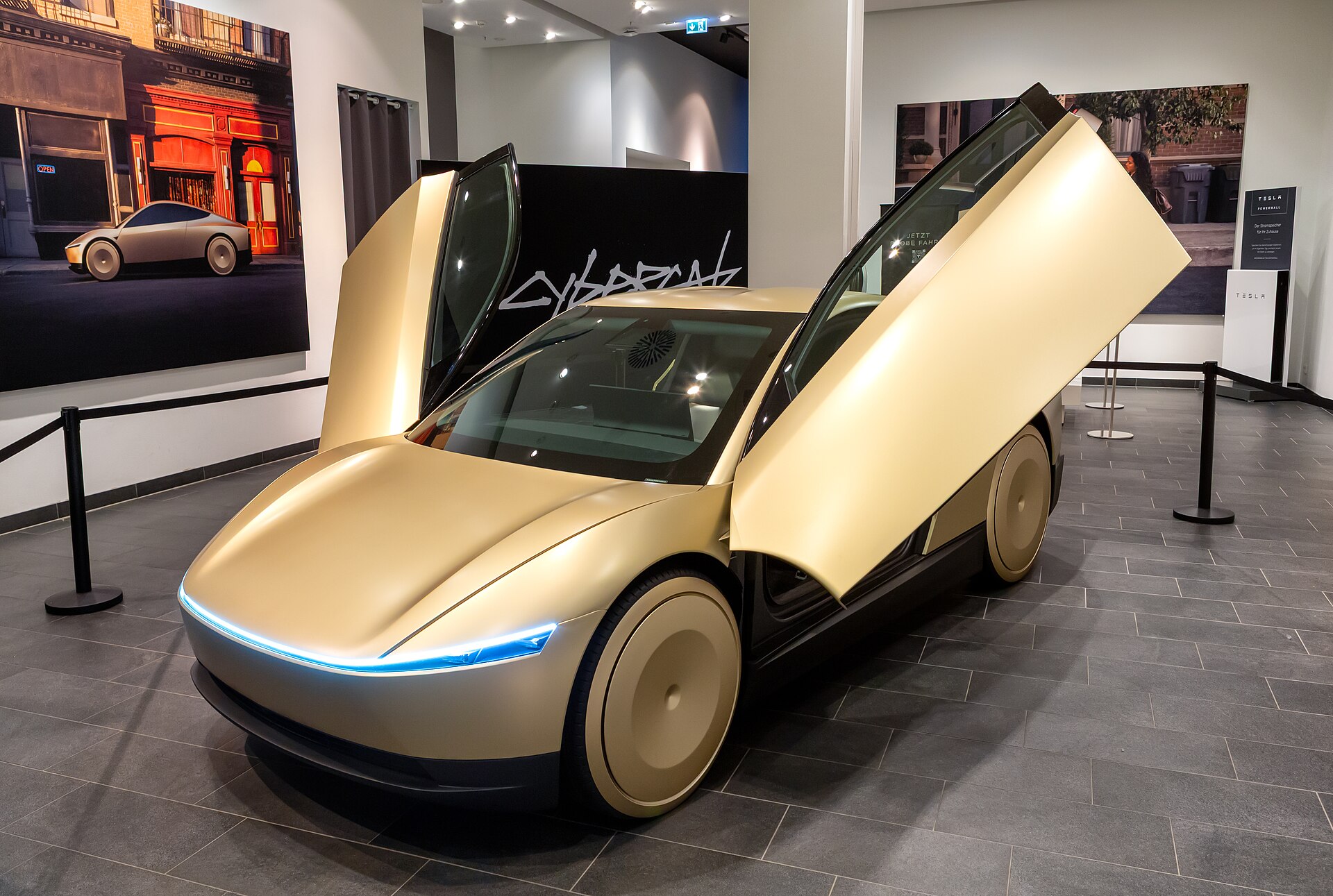
Yesterday’s GetEVCar post only logged Tesla’s Cybercab as a footnote because the official NHTSA file was not in hand. It is now. The National Highway Traffic Safety Administration’s public safety-issues API lists Audit Query AQ26002 — “Tesla Cybercab FMVSS Certification” — opened 3 September 2026, still open. The associated opening resume is INOA-AQ26002-17078.pdf. That is a demand that Tesla show how it certified a two-seat robotaxi, not a published finding that the car broke a rule.
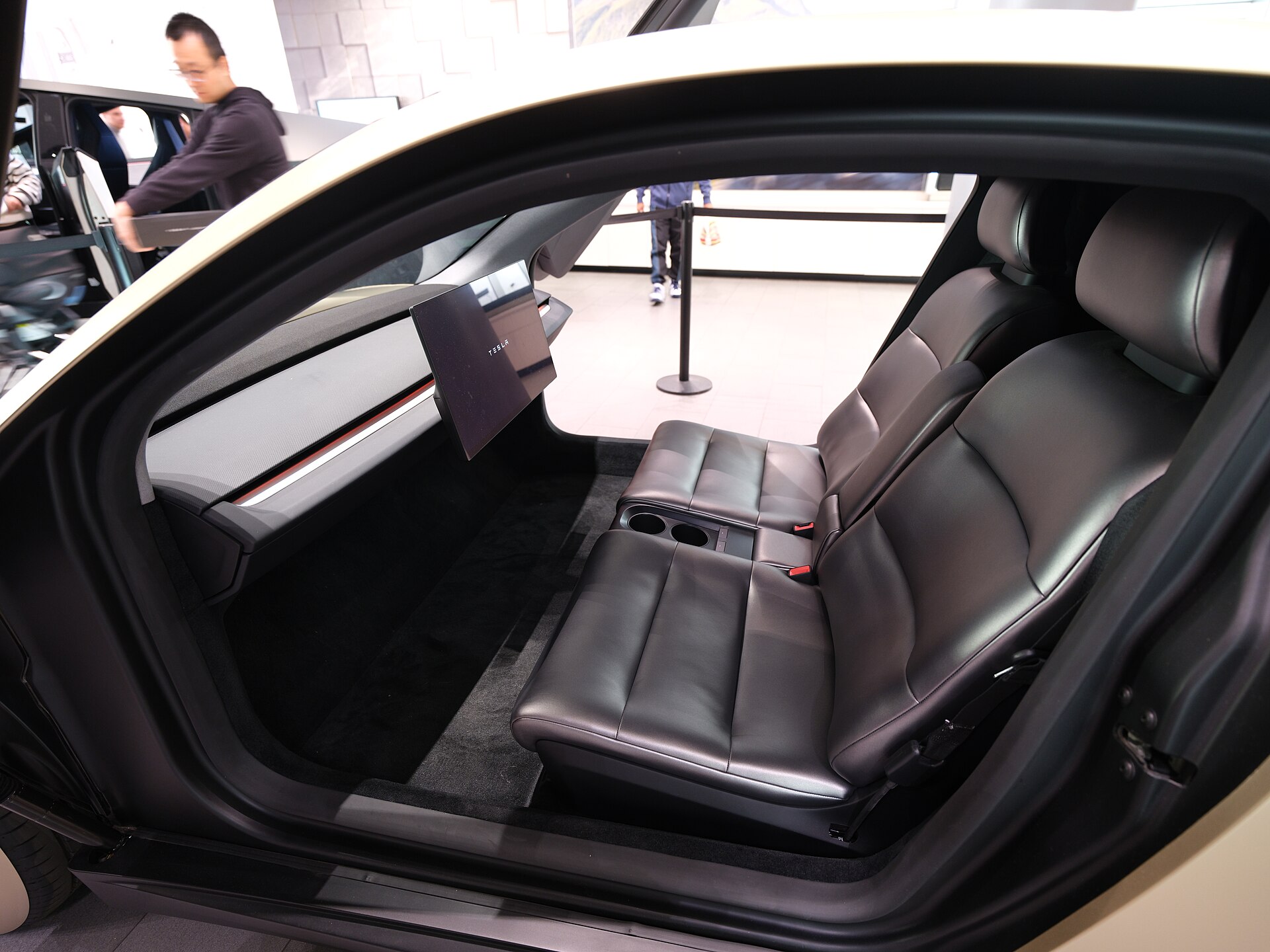
NHTSA’s own summary is the spine. Tesla began commercial deployment of a small number of Cybercabs in Austin, Texas, on 3 September, told the agency those vehicles comply with all applicable Federal Motor Vehicle Safety Standards, and said it plans to add vehicles and cities. The agency is examining the process and technical data behind that certification. It will also look at how far Tesla relied on a claim that some FMVSS simply do not apply to this vehicle. The reason sits in one official clause: the cars lack permanently attached, conventional manual controls
— no steering wheel, brake pedal, accelerator, or mirrors. CNBC, Electrek, and RTTNews all restated that same-day sequence independently. CNBC said Tesla did not immediately comment.
Shoppers who want the hardware that is actually on this site start on the live Tesla Cybercab (2026) page — 48 kWh, 471 km, 163 kW, United States Announced, fleet — and the Tesla brand hub. That is not a United Kingdom or UAE retail listing, and it is not a showroom car you configure like a Model 3. The United States market page is the right country door. We are not promoting the Cybercab as Available just because paid Austin rides have started; the catalogue flag is still Announced / fleet until Data Curator refreshes it from a manufacturer source.
How wide is the audit? NHTSA’s public summary talks about a small commercial Austin batch. CNBC wrote that the agency opened an audit into about 1,000 Cybercabs; RTTNews used the same estimated 1,000-vehicle population. We are not treating 1,000 as a NHTSA headcount printed in the API summary. CNBC separately cited Texas records as of Friday morning — 420 autonomous vehicles registered in the state, 45 of them Cybercabs. That 45/420 split is CNBC-plus-state-records, not an NHTSA table.
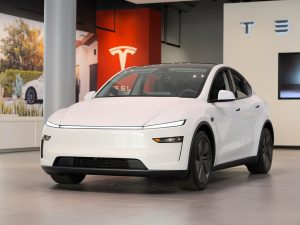
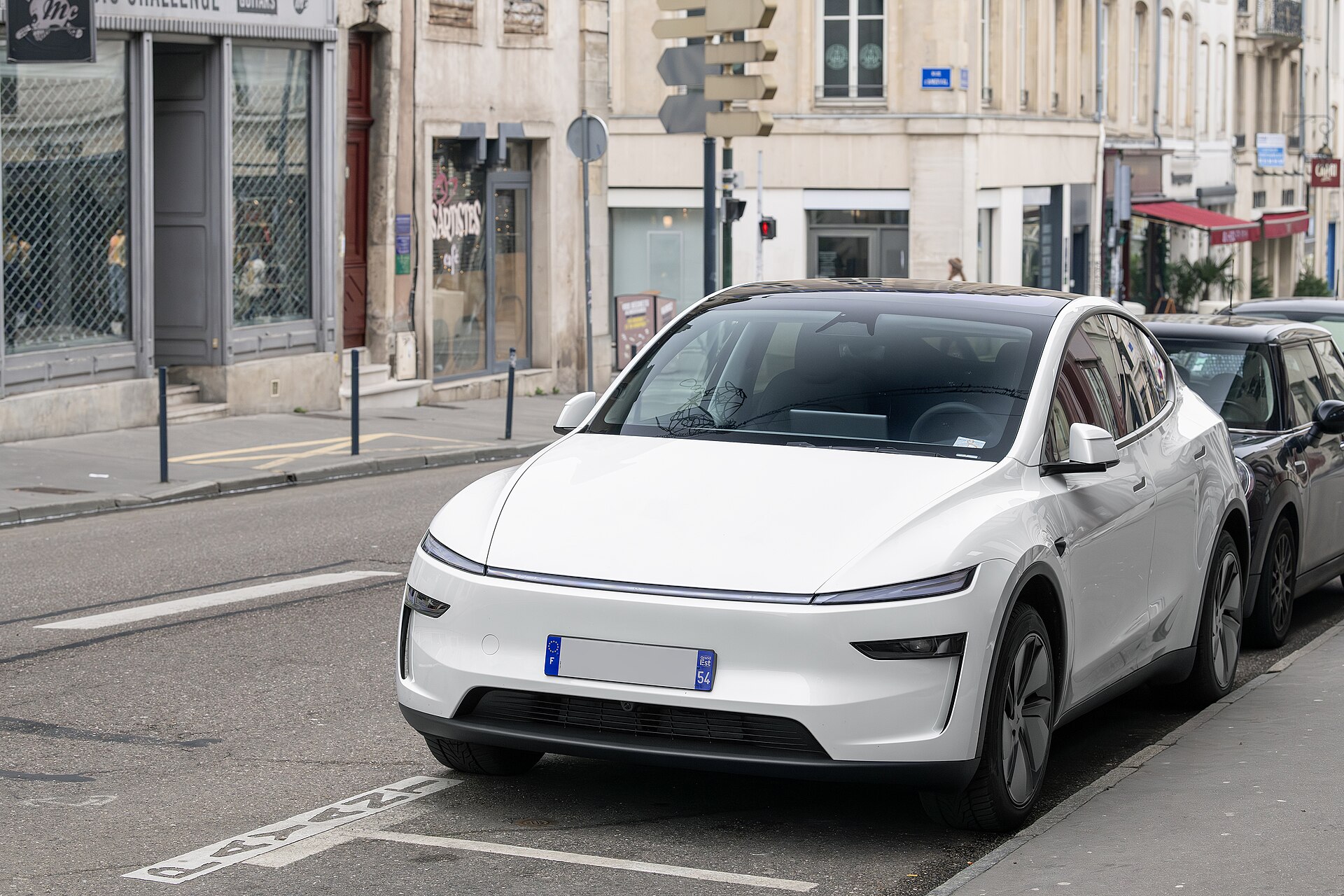
Austin’s robotaxi app did not start with this two-seater. Tesla had already been running paid rides in modified Model Y SUVs, the battery-electric crossover that remains UK / US / UAE Available on this site (75 kWh, 501 km Long Range AWD, 250 kW DC). The Cybercab is the purpose-built, wheel-free sibling; the Model Y is the one a household can still order. The other US-only Tesla on the live grid is the Cybertruck (123 kWh, 523 km AWD Dual Motor) — a pickup, not a taxi, and not covered by AQ26002. Electrek notes the Cybercab is meant for a geo-fenced robotaxi service rather than a public retail lot; that matches the fleet row on our page, and we are not inventing a US MSRP. Musk’s older sub-$30,000 line stays historical colour, not a 2026 window sticker.
This is the follow-through to our 25 August post that locked the 3 September Austin date. That article was an invite event. This one is the regulator’s paperwork the morning after rides began. AQ26002 is an Audit Query. It is not a recall, not a stop-sale, and not a verdict that Tesla’s self-certification is illegal. US makers self-certify; NHTSA checks the homework afterwards. We are not forecasting how long the query lasts or whether Tesla will need a Part 555 exemption.
Plug-in hybrids still moved overnight, just not on US robotaxi streets. GM Authority reported on 5 September that SAIC-GM-Wuling unveiled the Starlight M, a China-market full-size plug-in hybrid MPV due in production before year-end; SGMW did not price it for UAE, US, or UK, so it is not a GetEVCar model link. Shoppers who want a live plug-in SUV in our markets stay on the plug-in hybrid list — the Mitsubishi Outlander Plug-in Hybrid (2026) is United States and United Kingdom Available (22.7 kWh, 85 km electric, 220 kW, 805 km combined). That is a dealer PHEV, not a BEV taxi.
What we are not claiming: that NHTSA found a defect, that Cybercab is on sale in the UK or UAE, that 1,000 is Tesla’s Austin fleet today, or that the 48 kWh / 471 km figures are a new NHTSA spec sheet — they are the live catalogue numbers, which line up with trade-press pack size but are not an EPA label.